
A cruise ship breakfast service can begin before sunrise. By the time guests arrive, the buffet must look polished, coffee stations must be ready, and every team member needs to know their station. That is the reality behind a guide to cruise ship jobs: these are active, people-focused careers where skill, stamina, teamwork, and a calm attitude matter every day.
For students who enjoy hospitality, food, guest service, or working with people from different cultures, a cruise career can be a meaningful next step. It is not a holiday at sea. It is professional work in a fast-paced international environment. The right preparation helps you arrive ready to contribute, learn, and grow.
What Cruise Ship Jobs Are Really Like
A cruise ship is a floating hotel, restaurant district, entertainment venue, and operations center in one. Thousands of guests may be onboard, supported by crew members across hospitality, culinary, housekeeping, guest services, technical operations, retail, wellness, and entertainment.
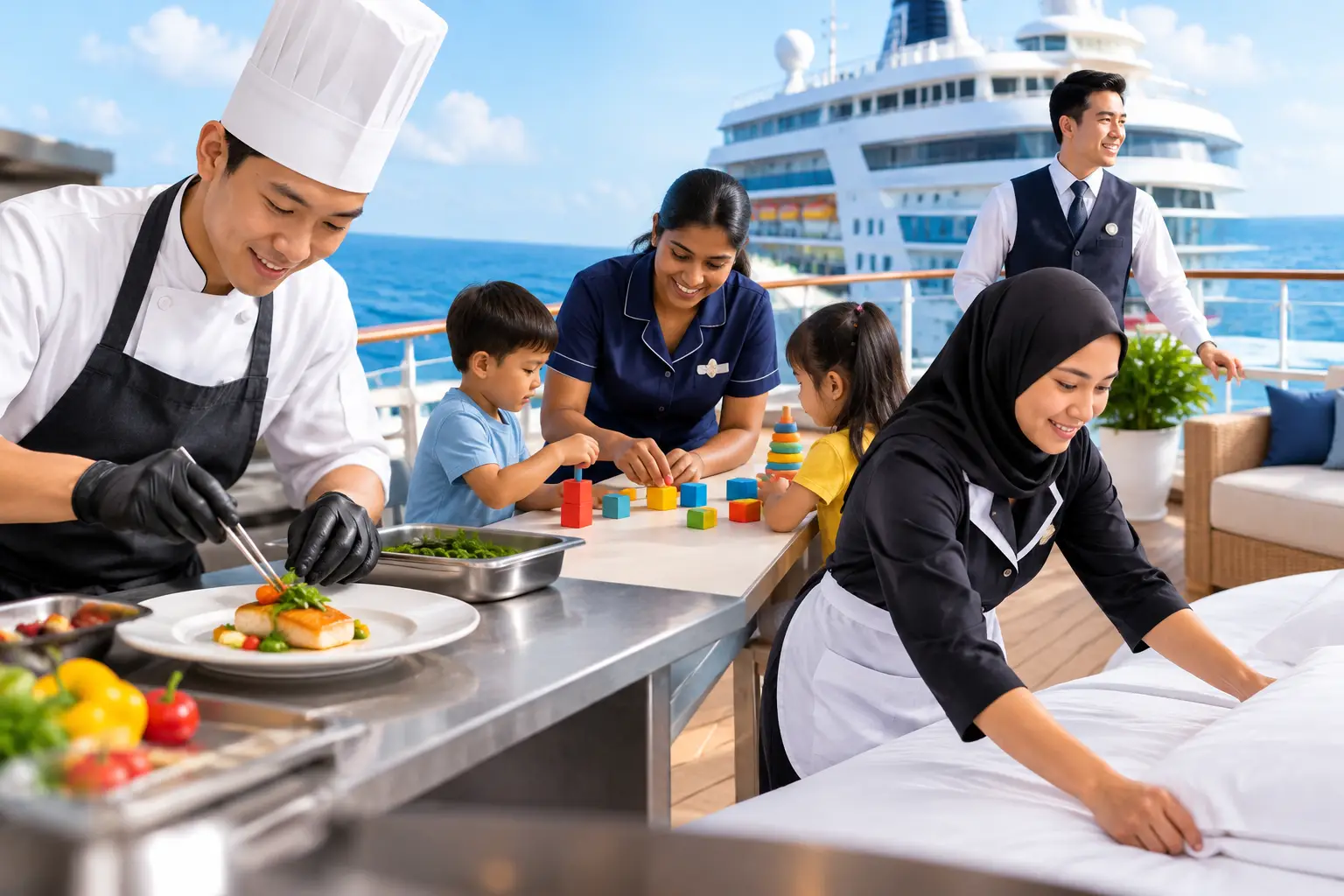
Most entry-level opportunities for hospitality-minded applicants sit within food and beverage, accommodation services, galley operations, guest-facing roles, and recreation. A server may handle several tables during a busy dining period. A commis chef may prepare ingredients for a large service under an experienced chef. A cabin steward may clean and organize rooms to exact standards while responding politely to guest requests.
The hours can be long, especially during embarkation days, major events, and peak meal times. You will share living spaces, follow onboard rules, and work with colleagues from many countries. In return, you gain exposure to international service standards and daily experience that few land-based workplaces can match.
Guide to Cruise Ship Jobs: Find the Right Role
The best role is not always the one with the most glamorous title. It is the one that matches the skills you enjoy using and the environment where you can perform well.
If you love kitchen work, galley roles may suit you. These include kitchen assistants, commis chefs, bakers, pastry assistants, butchers, and utility positions. Accuracy, food safety, knife skills, mise en place, and the ability to take direction are essential. Cruise kitchens operate at scale, so consistency matters just as much as creativity.
If you enjoy speaking with guests, food and beverage service can be a strong fit. Restaurant attendants, bar staff, buffet attendants, room service team members, and café crew need product knowledge, professional communication, and awareness of service timing. A friendly personality helps, but reliable technique is what keeps service running smoothly.
For people who are highly organized and observant, housekeeping and accommodation roles offer another route. These jobs involve cleanliness, room presentation, linen management, guest requests, and strict hygiene procedures. They demand care and energy, yet they also build highly transferable hotel operations skills.
Guest services, retail, photography, youth activities, and entertainment support roles may require more specific experience or qualifications. Some positions also have age, medical fitness, language, certification, or visa-related requirements. Always read the job description closely instead of assuming every cruise role has the same entry path.
Skills That Help You Stand Out Before You Apply
Cruise employers need people who can do the basics exceptionally well. A polished resume is useful, but it cannot replace real capability when you are facing a full dining room or a demanding prep schedule.
Start with practical hospitality habits: personal hygiene, safe food handling, clean station setup, correct uniform standards, punctuality, and respectful communication. These may sound simple, but they show that you understand professional expectations.
English communication is equally important because crew teams and guests often come from different countries. You do not need to sound perfect. You do need to listen carefully, give clear responses, ask for clarification when needed, and stay courteous under pressure. Additional languages can be an advantage in guest-facing roles.
Employers also notice whether you can work as part of a team. Onboard, one delayed task can affect an entire operation. A chef depends on the stewarding team, service staff depend on the kitchen, and everyone depends on handovers being accurate. Being dependable is a real career strength.
Digital confidence is becoming more useful too. Many hospitality workplaces use scheduling systems, point-of-sale tools, inventory platforms, and digital training modules. AI tools can support practice, such as helping you prepare interview questions, improve professional English, or organize a study plan. They support your preparation, but they cannot replace your judgment, service presence, or hands-on skills.
Build Experience Before You Board
You do not need to wait for a cruise contract to begin developing cruise-ready skills. A busy restaurant, hotel, banquet operation, café, resort kitchen, or event venue can teach you how to work to service timelines and professional standards.
At Ambitious Academy, we believe practical training should feel close to the workplace. In a kitchen, that means learning how to prepare, plate, clean down, communicate, and maintain standards while managing real time pressure. In hospitality training, it means understanding guest expectations rather than memorizing theory alone.
Recognized, industry-relevant qualifications can strengthen your application, particularly when they are supported by practical assessments and real service experience. For a school leaver, a focused vocational program can build a foundation before applying. For a working adult changing direction, it can help refresh your skills and show employers that you are serious about the move.
Keep evidence of what you have learned. Record the dishes you have prepared, stations you have handled, service tasks you have completed, and training certificates you have earned. A simple, well-organized portfolio can give you useful examples to discuss in an interview.
Prepare a Cruise-Ready Application
Your resume should be clear, honest, and relevant to the role. Put hospitality, culinary, customer service, language, safety, and technical skills near the top. Include practical experience, even if it came from internships, training kitchens, event work, or part-time jobs.
During interviews, expect questions about teamwork, handling difficult guests, following procedures, and managing pressure. Rather than giving vague answers, use a real example. Explain the situation, what you did, and what you learned. For example, you might describe how you helped a team complete a large event setup after a last-minute change, while keeping your area organized and communicating with your supervisor.
Before accepting any role, understand the contract carefully. Ask about the department, duties, contract length, working arrangements, accommodation, required documents, training, and medical requirements. A cruise job can be rewarding, but it requires commitment. Being informed helps you make a decision that fits your goals and personal responsibilities.
Life Onboard: The Trade-Offs to Consider
Living onboard can be exciting for people who want international exposure and a structured routine. You may visit different ports, meet coworkers from around the world, and develop confidence quickly through daily responsibility.
However, it can also be challenging. You may be away from family for months, have limited privacy, and need to stay professional even when you feel tired or homesick. Internet access, free time, and shore leave can vary depending on your schedule and the ship’s operations. If you value a predictable nine-to-five routine or need to be home frequently, a shore-based hospitality role may suit you better.
The key is to choose with open eyes. Cruise work is not for everyone, and that is completely fine. But for someone who enjoys practical work, adapts well, and wants to build international hospitality experience, it can be a powerful chapter in a longer career.
Start by choosing one area you genuinely enjoy, then train until the fundamentals become second nature. Whether you begin in a galley, restaurant, or guest service team, your hands-on skill and professional attitude will travel with you long after the ship reaches its next port.