
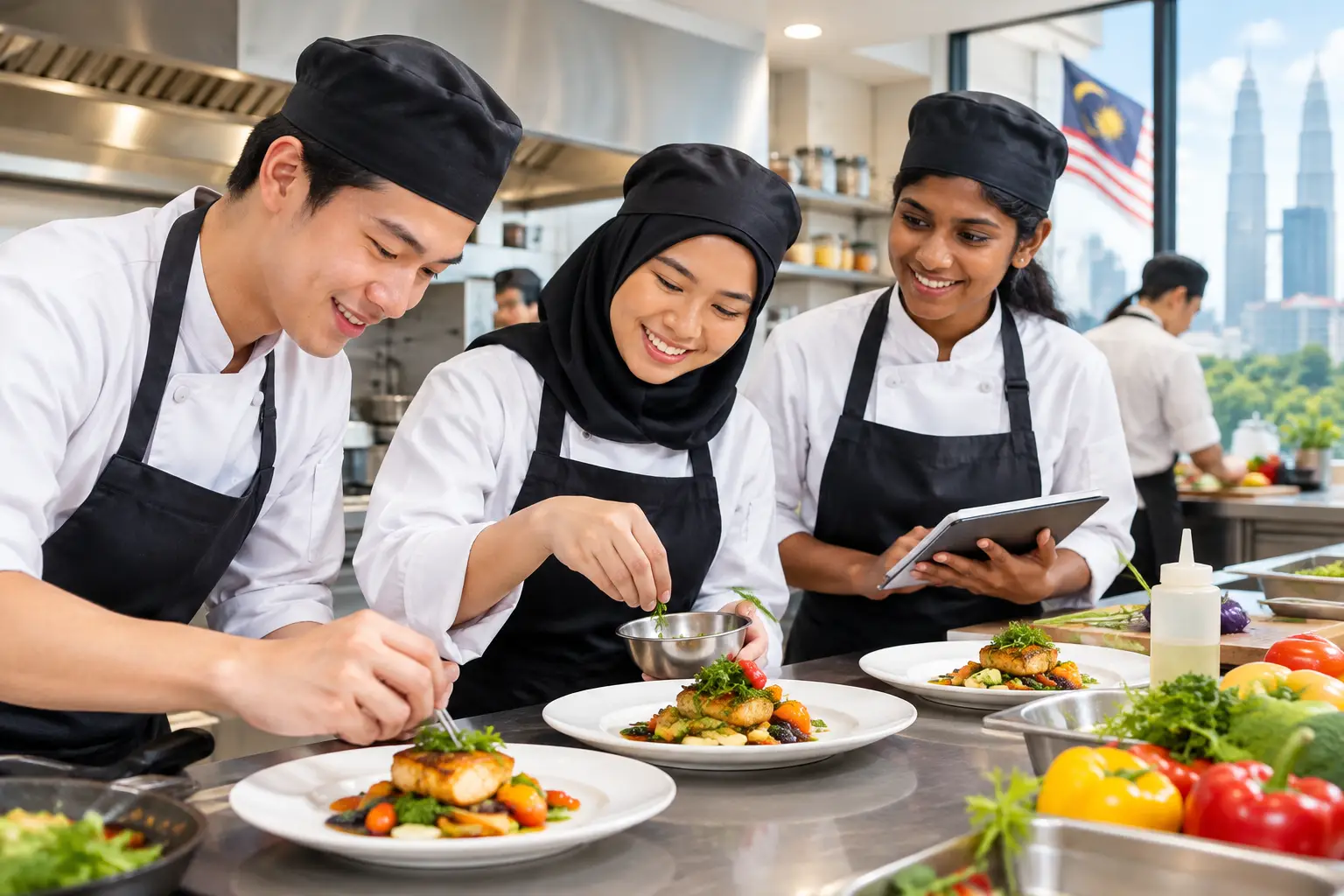
A busy kitchen does not pause because a new cook feels uncertain. Service tickets keep coming, the grill is hot, and every plate must meet the same standard. That is why the top certifications for culinary careers should do more than add a line to your resume. They should prove that you can work safely, follow professional systems, and turn practical skills into consistent results.
For students leaving school, career changers, and aspiring chefs in Malaysia, the right qualification depends on the kitchen you want to enter. A pastry-focused path is different from Chinese cuisine, hotel operations, or a cruise hospitality role. We encourage students to look beyond the certificate name and ask a more useful question: what will I actually be able to do after training?
Start With Food Safety Certification
Food safety is the foundation of almost every culinary role. Before an employer trusts you with prep, plating, or storage, they need confidence that you understand hygiene, cross-contamination, temperature control, personal cleanliness, and safe food handling.
In Malaysia, food handler training is particularly relevant for people working in food premises. It helps you understand the daily habits that protect customers and your team, from separating raw ingredients to cleaning workstations correctly. This is not glamorous work, but it is professional work. A beautifully cooked dish is not successful if it was prepared unsafely.
A food safety credential is especially useful if you are entering F&B for the first time, taking part-time kitchen work, or planning to operate a small food business in the future. It will not replace culinary training, but it gives your practical ability a reliable starting point.
Culinary Diplomas Build the Skills Employers Can See
A culinary diploma or structured chef apprenticeship program is often the strongest next step for someone who wants a long-term kitchen career. Unlike a short workshop, quality training gives you repeated practice under guidance. You learn not only how to make a dish, but how to prepare for service, manage timing, reduce waste, communicate with a brigade, and recover when something goes wrong.
At Ambitious Academy, our kitchen training is designed around hands-on development. Students work with ingredients, equipment, recipes, portions, and real service expectations rather than only watching demonstrations. Our mentors can correct a knife grip, explain why a sauce split, or show how to organize a station before pressure builds.
What to Look for in a Chef Qualification
The certificate itself matters, but the learning environment matters just as much. Look for a program with recognized qualifications, substantial kitchen hours, practical assessments, and instructors who understand current industry standards.
A useful culinary program should cover core techniques such as stocks, sauces, knife skills, protein cookery, menu planning, kitchen operations, and plating. It should also teach the discipline behind those techniques: mise en place, sanitation, recipe consistency, cost awareness, and teamwork.
If your goal is to become an executive chef one day, start by becoming dependable at the fundamentals. Leadership grows from repetition, calm judgment, and respect for every station in the kitchen.
Patisserie Certifications for Precision and Creativity
Patisserie is where creativity meets measurement. A savory cook can often adjust seasoning as they go. A pastry chef must understand ratios, temperatures, fermentation, sugar stages, texture, and finishing. One incorrect measurement can change the structure of a sponge cake, croissant, mousse, or custard.
A recognized patisserie qualification is a smart choice for students who enjoy detail, design, and product consistency. It can prepare you for bakery, café, hotel pastry, dessert, and celebration cake environments. Strong courses should include bread and viennoiserie, cakes, plated desserts, chocolate work, basic sugar skills, and hygienic production methods.
There is a trade-off to consider. Patisserie demands patience and precision, and many tasks begin long before customers arrive. If you enjoy methodical work and the satisfaction of a polished final product, that rhythm can be deeply rewarding. If you prefer the fast decisions of a hot kitchen, culinary cookery may fit you better.
Chinese Cuisine Training Has Its Own Professional Value
Chinese cuisine is not one set of recipes. It requires an understanding of ingredients, wok heat, knife preparation, stocks, steaming, stir-frying, braising, and the balance of flavor and texture. In professional settings, speed matters, but so does control. A wok dish can go from perfectly fragrant to overcooked in seconds.
A certification or diploma focused on Chinese cuisine can help aspiring chefs build specialized capability for restaurants, hotels, banquet kitchens, and modern dining concepts. It is particularly valuable when the training includes practical repetition rather than occasional demonstrations.
Students should seek programs that teach why a technique works. For example, knowing how to manage heat is more useful than simply memorizing a stir-fry recipe. Once you understand the principle, you can adapt to different proteins, sauces, menus, and kitchen equipment.
F&B and Hospitality Credentials Expand Your Options
Not every culinary career stays behind the kitchen door. Restaurants, cafés, hotels, events, and cruise environments need professionals who understand service, guest experience, beverage knowledge, teamwork, and operational standards.
An F&B or hospitality qualification can be a strong addition for students who want flexibility. You may begin in service, move into restaurant supervision, support banquets, or work closely with kitchen teams in a hotel or onboard environment. It is also useful for aspiring café owners because the customer experience begins long before the food reaches the table.
For cruise and hospitality pathways, training in communication, service etiquette, safety awareness, and multicultural teamwork matters alongside culinary knowledge. These environments can be exciting, but they also require adaptability. Long shifts, shared responsibilities, and high guest expectations are part of the reality.
Digital and AI Skills Are Useful Supporting Tools
A chef’s hands, palate, and judgment cannot be replaced by technology. But digital and AI tools can support the way modern food businesses operate. Used responsibly, they can help with menu research, allergen information organization, recipe costing drafts, social media content planning, stock tracking, and basic customer feedback analysis.
For a young chef, this can become a practical advantage. Imagine creating a seasonal dessert menu, then using digital tools to organize ingredient costs and present the concept clearly to a manager. The skill is not asking a tool to do your thinking. The skill is using it to work more efficiently while your culinary judgment stays in control.
How to Choose Among the Top Certifications for Culinary Careers
Start with your destination, not with whichever course sounds impressive. If you want to work in a professional kitchen, prioritize a practical culinary diploma or apprenticeship pathway plus food safety training. If you want to build a pastry portfolio, choose specialized patisserie training. If you are drawn to front-of-house leadership, hotels, or guest-facing work, F&B and hospitality credentials may give you broader exposure.
Then check how the qualification is assessed. A practical assessment, where you prepare, cook, present, and explain your work, tells a different story from a course based mainly on attendance or theory. Ask whether you will receive feedback, build a portfolio, and practice with industry-relevant equipment.
Finally, consider your schedule and commitment. A short certification can be a useful first move for a working adult or someone testing a new direction. A longer program gives more time to develop confidence and consistency. Neither choice is automatically better. It depends on whether you need an introduction, a specialization, or a full career foundation.
Your next qualification should feel like more than paper. Choose training that puts tools in your hands, gives you honest feedback, and helps you leave the kitchen more capable than when you entered. The first well-run service you handle with confidence may teach you exactly why that choice mattered.