
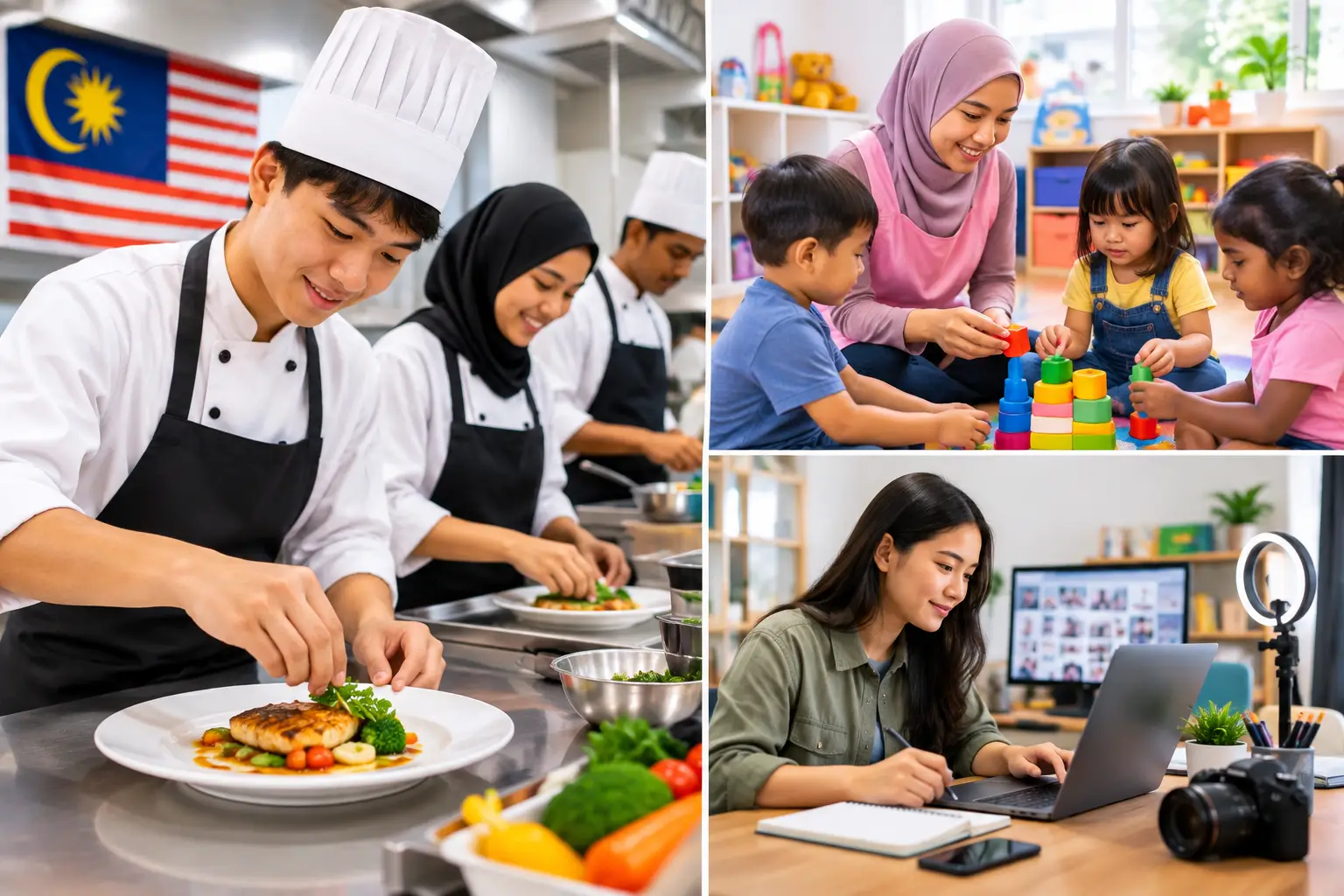
The strongest careers often begin with a real task: shaping pastry dough before sunrise, managing a busy restaurant service, filming a product reel, or welcoming guests who have traveled across the world. The top jobs from vocational diplomas are built around those practical moments. They suit people who want to learn by doing, develop a craft, and move toward a career with skills they can demonstrate, not just describe.
At Ambitious Academy, we see that determination matters more than fitting one narrow idea of success. A vocational diploma can give school leavers, career changers, and working adults structured training, industry-relevant practice, and a qualification that supports their next step. The right path depends on what kind of work energizes you, how you like to solve problems, and the environment where you can do your best work.
Top Jobs From Vocational Diplomas to Consider
Commis Chef or Kitchen Professional
A culinary diploma can lead to an entry role as a commis chef, kitchen assistant, prep chef, or cook in restaurants, hotels, catering kitchens, and food businesses. This is a hands-on career for people who enjoy pace, precision, and the satisfaction of turning quality ingredients into a complete dish.
The early work is not all glamorous. You may prepare ingredients, manage station setup, follow food safety procedures, and support senior chefs during service. Those foundations matter. A reliable chef who can control portions, communicate under pressure, and keep a clean station earns trust quickly.
Our Executive Chefs Apprenticeship Program is designed around the practical habits kitchens expect. Students build knife skills, cooking techniques, menu awareness, plating discipline, and teamwork through real kitchen-based learning. Over time, that experience can support progress into chef de partie, sous chef, specialty cuisine, catering, or food business roles.
Pastry Chef, Baker, or Dessert Specialist
Patisserie suits students who enjoy detail, creativity, and repeatable technique. A diploma can prepare you for roles such as junior pastry chef, baker, cake decorator, dessert production assistant, or chocolatier assistant.
Pastry work rewards accuracy. Temperature, timing, ingredient measurements, texture, and finishing all affect the final result. A beautiful cake may catch attention, but a professional kitchen also needs someone who can produce consistent items for service and manage preparation efficiently.
Students gain confidence by practicing the full process: weighing ingredients, making doughs and creams, building layered desserts, decorating cakes, and understanding presentation. For someone interested in eventually selling custom cakes or opening a small dessert business, these skills also create a more informed starting point. Creativity helps, but cost awareness, hygiene, and production planning matter too.
Chinese Cuisine Cook or Dim Sum Kitchen Specialist
Chinese cuisine offers a career route rooted in technique, flavor balance, speed, and cultural knowledge. Graduates may begin as kitchen assistants or junior cooks in Chinese restaurants, banquet kitchens, hotels, and specialty food operations. With experience, they can grow into station-based roles focused on wok cooking, roasting, noodles, sauces, or dim sum.
This path is especially rewarding for students who appreciate the discipline behind traditional methods. Strong knife work, heat control, ingredient preparation, seasoning, and plating are not shortcuts. They are skills developed through repetition and feedback from mentors.
A vocational diploma gives you a structured setting to practice before the pressure of a commercial kitchen is fully on you. It can also help you understand how traditional culinary craft adapts to current customer expectations, including presentation, menu design, and food content for digital platforms.
Cruise Hospitality Crew Member
For students who want a customer-facing career with an international setting, cruise and hospitality training can open doors to roles in guest services, housekeeping, food service, reception support, and onboard hospitality operations. This work can be energetic, social, and highly structured.
It also comes with real trade-offs. Cruise work may require extended time away from home, shift-based schedules, strict grooming standards, and the ability to work respectfully with people from many cultures. It is a better fit for someone who is adaptable, organized, and genuinely enjoys helping guests, rather than someone looking only for travel.
Hospitality training develops the habits that make service feel professional: clear communication, attention to detail, complaint handling, teamwork, and awareness of guest needs. These skills can transfer to hotels, resorts, events, and customer experience roles in Malaysia as well.
Food and Beverage Service Professional
Food and beverage careers are about much more than carrying plates. A trained F&B professional understands service flow, menu knowledge, guest interaction, hygiene, beverage preparation, table settings, and the timing that makes a dining experience feel smooth.
Entry roles may include restaurant service crew, barista, banquet service staff, host, bartender assistant, or café supervisor trainee. With experience, people can move toward restaurant supervision, outlet management, event service, or their own café and catering projects.
This route is a strong match for confident communicators who like working with people. During hands-on training, students learn how to greet guests, take accurate orders, respond professionally when something goes wrong, and coordinate with the kitchen. Those everyday skills build credibility quickly because employers need team members who can stay calm during a busy shift.
Digital Marketing Executive or Content Coordinator
A vocational diploma in digital marketing can lead to roles such as digital marketing assistant, social media coordinator, content creator, e-commerce assistant, or junior SEO and advertising support staff. These jobs suit people who are curious about what makes audiences stop scrolling, click, visit, and remember a brand.
Practical learning should go beyond posting attractive images. Students need to plan content, write clear captions, understand audiences, review campaign results, organize a content calendar, and recognize how websites, search, social platforms, and paid promotions work together.
AI and digital tools can make this work faster and more informed. They can help generate early content ideas, analyze patterns, organize research, or create first drafts. The human skill remains essential: deciding whether the message sounds right, checking accuracy, protecting a brand’s voice, and making creative choices that feel original rather than copied.
Creative Media Producer or Junior Designer
Creative media graduates can pursue work in video editing, graphic design, photography support, social media production, motion graphics, and content production. Businesses need visual communication for campaigns, products, events, and everyday customer engagement.
A portfolio often matters as much as a qualification in this field. Employers and clients want to see how you solve a brief: Can you edit a clear short video? Can you create visuals that fit a brand? Can you accept feedback and improve the next version? A good vocational program gives students repeated opportunities to make, review, revise, and present real creative work.
Digital tools and AI can support faster ideation, rough storyboards, caption options, and editing workflows. They do not replace taste, visual judgment, or the ability to tell a story that connects with people. Those are the human strengths creative professionals bring to the table.
How to Choose Between Vocational Diploma Career Paths
Start with the work, not the job title. Picture the ordinary Tuesday. Would you rather be in a kitchen preparing for service, speaking with guests on a busy floor, editing a video at a computer, or developing a campaign idea with a team? The daily environment is often a better guide than the label on a course.
Next, look for training with enough practical exposure. Ask what you will make, cook, serve, create, or manage during the program. Find out how mentors give feedback, how students build portfolios or practical confidence, and how the qualification connects to industry expectations. Recognized qualifications are valuable, but the skills behind them are what you will use every day.
Finally, be honest about your preferred pace. Culinary and F&B work can involve standing for long periods and busy service hours. Hospitality requires patience and emotional awareness. Digital marketing and creative media require continuous learning because platforms and tools change. None of these realities should put you off if the work fits you. They simply help you choose with clear eyes.
A vocational diploma is not a promise that every career path will look identical. It is a practical starting point that lets you build proof of what you can do. Bring your questions, visit a learning environment if you can, and choose the skill you would still be proud to practice when the first excitement becomes real work.