
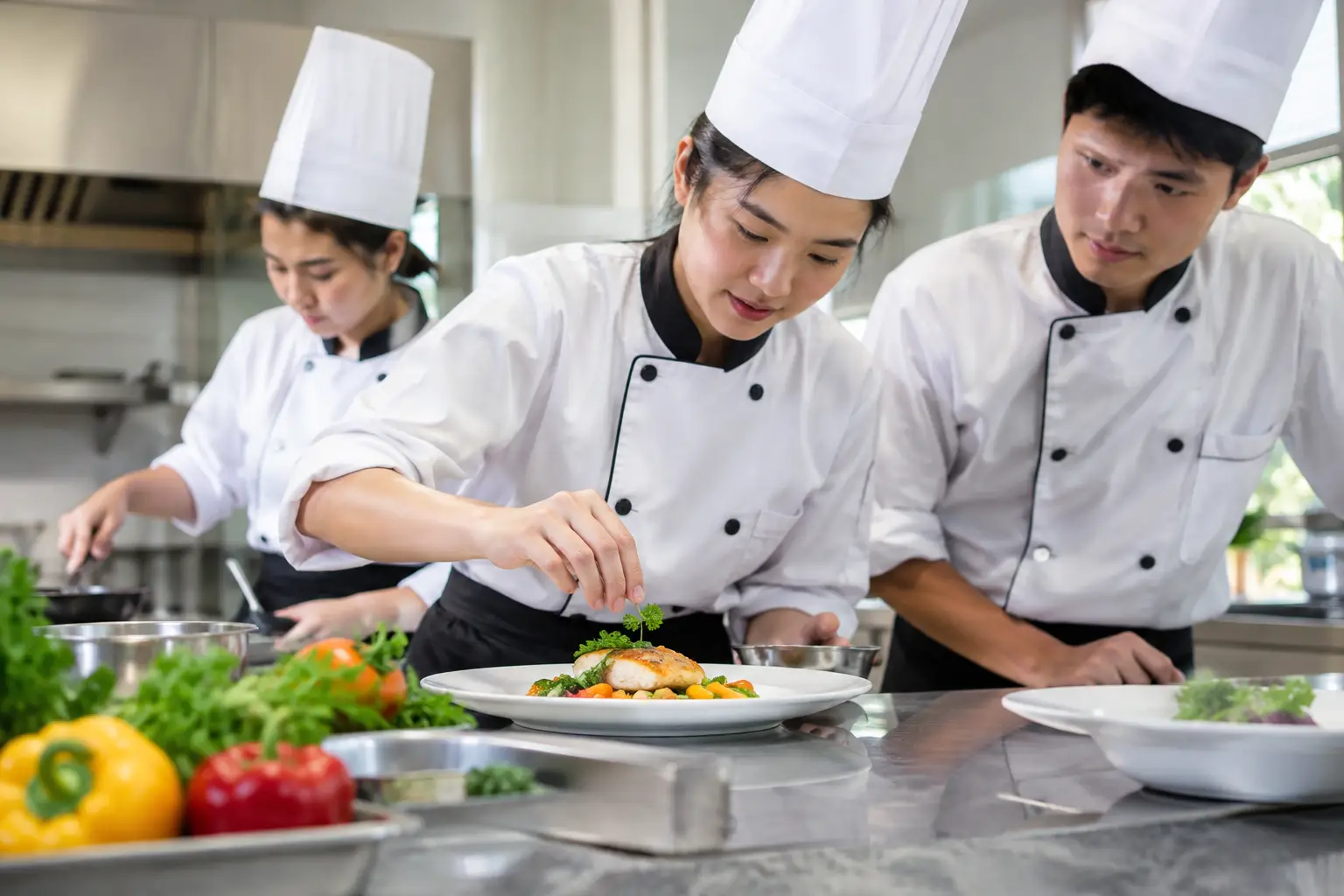
A chef’s jacket can get you into a kitchen for a trial shift. What helps you keep learning, move between roles, and explain your training to an employer is proof of what you can do. International culinary certifications are one way to show that your skills have been assessed against a recognized standard, not just practiced at home or picked up casually.
For students planning a future in restaurants, hotels, catering, bakeries, cruise hospitality, or their own food business, the right qualification can add structure to your talent. But a certificate name alone is not the answer. The training behind it, the assessment method, and the practical skills you leave with matter just as much.
What are international culinary certifications?
International culinary certifications are qualifications, awards, or professional credentials that are recognized beyond one school, city, or country. They may be issued by an established awarding body, assessed through a structured skills framework, or aligned with standards used by hospitality employers internationally.
They are not all the same. Some are entry-level certificates built around essential kitchen operations. Others are diplomas that cover menu planning, food safety, kitchen supervision, nutrition, costing, and advanced techniques. Professional certifications may also be designed for cooks who already have workplace experience and want formal recognition of their ability.
The value of an international qualification is often portability. If you apply to a hotel group, work in another country, or move into a cruise-related hospitality environment, an employer may find a clearly structured credential easier to understand than an informal training record. Still, recognition is not automatic everywhere. Employers, immigration authorities, and licensing bodies can have different requirements, so always check what applies to your intended role and destination.
Why the right certification matters in a real kitchen
Kitchen work is practical. You need to control heat, prepare ingredients efficiently, follow hygiene procedures, communicate during service, and plate food consistently under pressure. A useful certification should assess those abilities, not only test whether you can memorize culinary terms.
That is why the training environment matters. A student who has practiced knife skills, stocks and sauces, meat and seafood preparation, cooking methods, pastry basics, station setup, cleaning routines, and service timing develops a different kind of confidence. You are not simply collecting a document. You are building habits that make you more reliable on your first day at work.
Employers also look for people who understand the rhythm of a professional kitchen. They want team members who arrive prepared, keep their station organized, respect food safety rules, and respond well to feedback. A qualification can support your application, but your attitude and practical performance will shape the opportunity.
For this reason, a shorter certificate can be the right choice for one student, while a longer diploma may suit another. It depends on your current experience, the role you want, your budget, and how much time you want to spend developing a wider foundation.
A certificate is not the same as a diploma
A certificate program often focuses on core employability skills and can be a strong starting point for someone who wants to enter the industry sooner. It may cover essential culinary techniques, kitchen safety, basic food preparation, and workplace routines.
A diploma usually goes further. Alongside practical cooking, it may include culinary theory, menu design, purchasing, food costing, leadership, and business awareness. This broader preparation can be useful if you see yourself progressing toward chef de partie, kitchen management, catering, or entrepreneurship.
Neither path is automatically better. If your goal is to start working quickly and gain experience in a kitchen, focused skills training may be a smart move. If you want more time to develop a complete foundation and explore different career directions, a diploma may offer greater depth.
How to evaluate international culinary certifications
Do not choose based on a logo, a long list of cuisine names, or a promise that sounds too easy. Ask direct questions before you enroll. A credible program should be clear about what you will learn, how you will be assessed, and what qualification you receive at the end.
Look closely at these four areas:
- Awarding body and recognition: Find out who issues or validates the qualification. Ask where the credential is recognized and whether it is relevant to the employers or countries you are considering.
- Practical training time: Check how often you will be in a training kitchen. Culinary ability develops through repetition, correction, and real production tasks.
- Assessment method: Ask whether you will complete practical assessments, written work, portfolios, or all three. A practical course should test more than theory.
- Industry relevance: Review the modules. Food safety, workflow, portion control, costing, communication, and kitchen discipline are as valuable as impressive dishes.
You should also ask about instructor experience, kitchen equipment, class size, ingredient standards, internship opportunities if available, and graduate support. These details affect your daily learning experience far more than a glossy brochure.
Skills that make a qualification more useful
Culinary education is changing because kitchens are changing. Chefs still need strong fundamentals, but modern food businesses also depend on accurate costing, stock control, digital ordering systems, recipe consistency, social media awareness, and responsible sourcing.
Digital and AI tools can support these tasks. For example, a student might use digital templates to calculate recipe costs, organize a production schedule, compare menu margins, or draft ideas for customer-facing menu descriptions. These tools can save time and help you think more systematically. They cannot teach you how a sauce tastes, whether a pastry is properly laminated, or how to stay calm when service gets busy. Your hands, palate, judgment, and teamwork remain central.
The most useful training combines both sides: solid culinary technique and awareness of the systems that support a professional kitchen. This is especially relevant for students who may eventually run a small café, catering service, bakery, or online food business.
Choosing a path that fits your career goal
Start with the job you want to try first, not the most impressive title you can find. If you are interested in hot kitchen work, look for training with strong coverage of cooking methods, sauces, proteins, vegetables, and service operations. If pastry is your interest, make sure the course includes repeated hands-on work in baking, desserts, doughs, decoration, and production planning.
Students interested in Chinese cuisine should seek meaningful practice with the techniques, ingredients, preparation styles, and kitchen discipline associated with that specialization. A broad culinary course can provide an excellent base, but specialist training may be more relevant if you already know the cuisine you want to pursue.
If your long-term interest is hospitality or cruise work, culinary skills can still be valuable, but you may also need customer service, communication, safety awareness, and an understanding of hotel operations. Your pathway does not have to be one straight line. Many food professionals begin in one area, then discover a different strength through practical training.
At Ambitious Academy, the focus is on helping students build practical, industry-relevant skills through hands-on learning. When comparing options, ask for a campus consultation or course information that shows the actual modules, facilities, qualification pathway, and expected training experience. A good decision begins with clear information, not pressure.
Your certification is the starting point, not the finish line
A recognized culinary qualification can give you a credible foundation and a clearer way to present your abilities. It can also give you a routine for practicing the standards that kitchens expect. But progress comes from what you do after each lesson: repeat the technique, accept correction, learn from every service, and stay curious about food.
Choose training that gives your determination somewhere practical to go. The kitchen needs people who are willing to learn with their hands, think with care, and keep improving one plate at a time.