
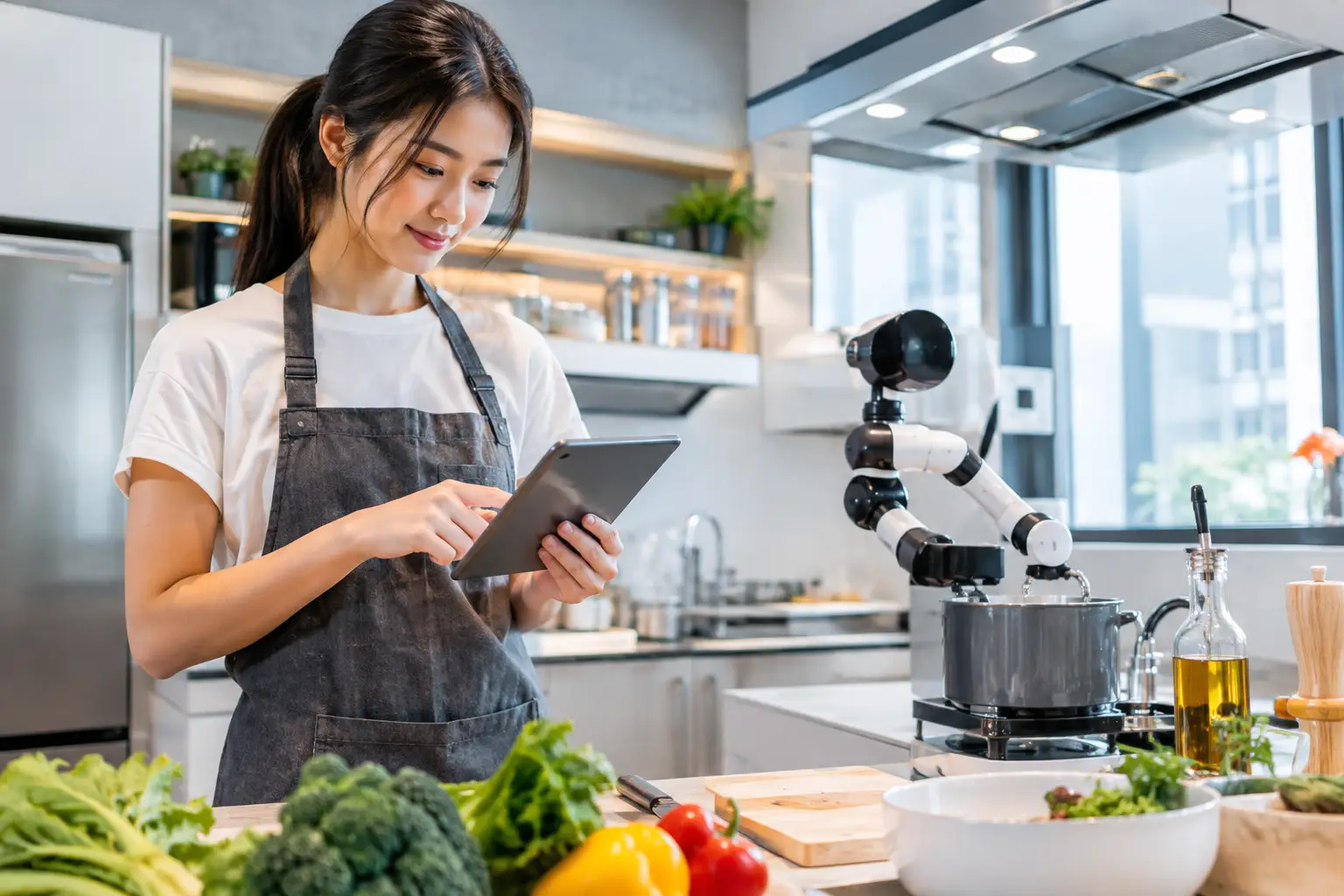
The lunch rush does not wait for anyone. Tickets stack up, ingredients run low, one station falls behind, and a small mistake can affect every plate that leaves the pass. Understanding how AI improves kitchen workflow starts here: not with robots replacing chefs, but with better information reaching the right person before a problem becomes a delay.
For students preparing for culinary, patisserie, Chinese cuisine, food and beverage, or hospitality careers, AI is becoming another workplace tool to understand. Like a combi oven, POS system, or digital thermometer, it can support good work. The chef still needs judgment, knife skills, timing, taste, food safety knowledge, and the ability to lead a team.
How AI Improves Kitchen Workflow From Prep to Service
A kitchen runs on planning. Before the first customer arrives, the team needs to know what to prep, how much to prep, where ingredients are stored, and which tasks must happen first. AI tools can analyze past sales, reservations, weather patterns, seasonal demand, and event bookings to estimate what the kitchen may need for a shift.
That forecast can help a chef plan production more accurately. If a restaurant usually sells more noodle dishes on rainy evenings or more desserts during weekend bookings, the kitchen can prepare with a clearer starting point. This does not mean blindly following a screen. A skilled cook still considers local events, supplier changes, menu promotions, and what is actually happening in the dining room.
The value is practical: less guessing, less overproduction, and fewer moments when a key item runs out halfway through service.
Smarter prep lists, not less hands-on work
Prep is where consistency begins. AI-supported kitchen systems can turn predicted demand into organized prep lists by station. The garde manger station may receive a suggested quantity for salads and cold sauces, while the pastry team sees expected dessert portions and the hot line sees proteins, sauces, and garnishes to prepare.
This gives the team a clearer order of work. Instead of discovering missing mise en place at 6:30 p.m., cooks can check priorities early, complete time-sensitive tasks first, and communicate what still needs attention.
For a student, the lesson is not simply to follow a digital checklist. It is to understand why each item is on the list. Is the quantity realistic? Does the dish have a short shelf life? Can one component be prepared ahead without affecting quality? Good kitchen workflow depends on thinking, not just ticking boxes.
Better inventory decisions and less food waste
Inventory is one of the strongest examples of how AI improves kitchen workflow. When connected to sales records and stock data, AI can flag ingredients that are running low, identify slow-moving items, and suggest ordering quantities based on expected demand.
This can reduce the common problem of over-ordering perishables. If the kitchen has excess cream, ripe fruit, or fresh herbs, the team can act early by creating a suitable special, adjusting a garnish, or prioritizing those ingredients in staff meals where appropriate. That decision still requires culinary knowledge and food safety awareness. An AI tool may recognize a pattern in stock movement, but it cannot taste a sauce or judge whether an ingredient meets the standard for service.
There is also a cost benefit. Food waste affects profits, but it also reflects poor planning and unnecessary use of resources. Learning to manage stock carefully is a professional habit that matters in restaurants, hotels, bakeries, catering operations, and cruise hospitality.
Faster Communication During Busy Service
A kitchen is a team environment. Delays often happen because information is unclear, not because people are unwilling to work. AI can help connect order data, kitchen display systems, reservations, and delivery platforms so teams can see what is happening in real time.
For example, a kitchen display may highlight orders that have been waiting too long, group similar dishes for efficient firing, or alert the team when several tables are ordering the same menu item. A manager can see whether one station is becoming overloaded and move support before the whole service slows down.
Used well, this improves communication without creating noise. Used poorly, constant alerts can distract cooks and make service more stressful. The best setup is simple: show the information that helps the team make a decision, and avoid turning every small change into an alarm.
More accurate recipes and consistent portions
Consistency matters whether you are producing 20 plates or 200. Digital recipe systems can use AI to help scale recipes, calculate yields, track allergens, and guide portion control. This is especially useful in operations with multiple shifts or locations, where every team member needs to follow the same standards.
A scaled recipe is not automatically a perfect recipe. Some techniques do not multiply neatly. A sauce may reduce differently in a larger batch, dough may respond to temperature and humidity, and seasoning always needs a final human check. In patisserie, small changes in measurements, mixing time, and oven behavior can affect the result.
That is why practical training remains essential. AI can calculate, organize, and flag possible issues. The cook or pastry chef must understand the method well enough to adjust with confidence.
AI Can Support Scheduling and Training Too
Kitchen workflow is not only about food. It also includes people. Staffing tools can review expected business volume and help managers build schedules that match the needs of a shift. A quieter weekday may need a smaller team, while a banquet, holiday period, or group reservation may require more support at prep, service, and dishwashing stations.
Fair scheduling still needs a human manager. Availability, skill levels, learning opportunities, and team wellbeing cannot be reduced to numbers alone. A junior cook may need to work alongside an experienced chef to build confidence, even if a scheduling system suggests the lowest-cost roster.
AI can also support training through digital checklists, video demonstrations, quiz feedback, and recipe practice records. For students, this can make it easier to revisit a method before practical class or review common errors after a session. But the most valuable learning still happens at the bench, stove, or pass, where you develop speed, coordination, and sensory judgment.
What AI Cannot Do in a Professional Kitchen
AI is useful when it reduces repetitive admin work and gives teams better visibility. It is not a substitute for professional standards. A tool cannot fully understand the texture of perfectly cooked fish, the balance of a broth, the timing of a busy pass, or the trust built between a chef and the rest of the brigade.
It also cannot remove responsibility. Food safety procedures, allergen control, cleaning standards, and final quality checks must always be handled seriously by trained people. If a system recommends using an ingredient, the kitchen team still needs to check its condition, storage temperature, labeling, and suitability.
There are privacy and cost considerations too. Smaller independent kitchens may not need advanced software for every task. A well-organized prep sheet and regular stock count can be more effective than an expensive system nobody uses properly. The right choice depends on the size of the operation, menu complexity, staff confidence with technology, and the actual problem being solved.
Skills Students Should Build Alongside AI
Students entering the industry do not need to become software engineers. They do need to become confident, adaptable professionals who can use technology without losing their craft.
Start by building strong kitchen fundamentals: mise en place, hygiene, knife skills, recipe reading, costing awareness, communication, and time management. Then learn how digital tools fit into those tasks. Practice reading production data, checking inventory records, following digital recipes, and asking sensible questions when a forecast does not match what you see on the ground.
At Ambitious Academy, practical learning should prepare students for real workplaces where traditional craft and digital tools increasingly work side by side. The goal is not to let technology make every decision. It is to help future chefs and hospitality professionals make better decisions under pressure.
The next time you organize a prep list or plan a menu, ask one useful question: what information would help this kitchen work more clearly, safely, and efficiently? Learning to answer that question is a strong first step toward becoming the kind of professional every kitchen needs.