
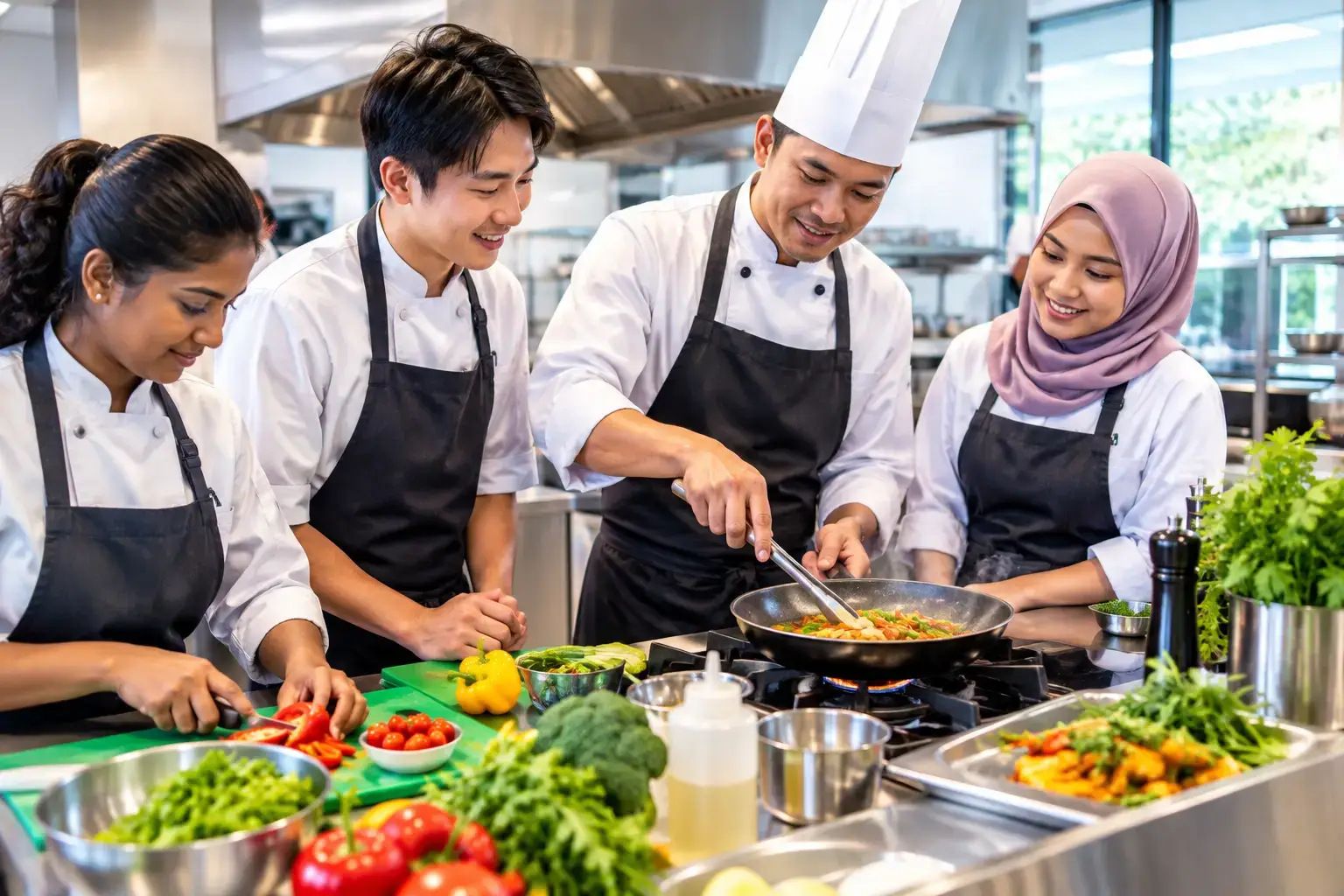
The dinner rush does not pause while you search for the next step in a recipe. A chef needs to read the station, communicate clearly, keep food safe, and send out consistent plates under pressure. That is why the right chef courses are built around more than learning dishes. They should help you become useful, calm, and capable in a real kitchen.
At Ambitious Academy, we believe determination matters. Whether you have just finished SPM or UEC, are changing direction after working in another field, or have spent years cooking for family and friends, practical training can turn interest into professional skill. The goal is not to copy someone else’s style. It is to build the fundamentals that let you develop your own.
What Good Chef Courses Should Teach
Recipes matter, but recipes are only the starting point. In a professional kitchen, you need to understand what happens when heat is too high, why a sauce splits, how to adjust seasoning without losing balance, and how to organize your work before service begins.
Strong training begins with core techniques: knife handling, stock and sauce preparation, cooking methods, ingredient handling, plating, and food safety. These skills may sound basic, but they are the habits that make a kitchen professional reliable. A clean cutting board, accurate portioning, and clear labeling can affect quality just as much as a beautiful final plate.
Our mentors focus on the details students use repeatedly. You may practice preparing mise en place before cooking, then learn how that preparation protects your timing when several orders arrive at once. You may make the same sauce more than once, not because repetition is dull, but because your hands and palate need enough practice to recognize consistency.
Technique Needs Context
Knowing how to sear protein is useful. Knowing when to sear it, how to rest it, what sauce and garnish support it, and how to send it at the right temperature is professional judgment. Good chef training places technique inside a working kitchen routine.
Students should also be exposed to different kitchen roles. One day, you may lead a section; another day, you may support a teammate by restocking ingredients, communicating cooking times, or checking the pass. This builds respect for the whole brigade, not just the person plating the dish.
Hands-On Practice Changes How You Learn
Watching a cooking video can inspire you. Working through a service-style session reveals where you need to improve. The difference is immediate: your chopping speed, workspace organization, seasoning choices, and communication become visible.
Hands-on chef courses give you room to make mistakes while a mentor can explain what happened and how to correct it. If a pastry does not rise properly or a broth lacks depth, the lesson is not simply that it failed. The lesson is to trace the cause: Was the temperature inaccurate? Was an ingredient measured incorrectly? Did the process move too quickly?
This approach is especially valuable for students who learn by doing. Instead of only memorizing culinary terms, you connect them to the feel of dough, the sound of a hot pan, and the visual changes that tell you food is ready. Those observations become instinct over time.
At Ambitious Academy, practical kitchen sessions are central to how we train. We want students to leave a lesson able to explain a technique, perform it, and improve it after feedback. That is a stronger foundation than memorizing a recipe once for an exam.
Choose Training That Reflects Industry Expectations
A kitchen can be creative, but it is also structured. Employers look for people who can follow hygiene requirements, work with others, manage time, and maintain standards during busy periods. These expectations are not separate from culinary ability. They are part of it.
When comparing chef courses, look beyond the course name. Ask how much time is spent in practical kitchens, what qualifications are included, how students are assessed, and whether the training reflects current food service practices. Recognized qualifications can help demonstrate that your learning follows established standards, while practical experience helps you speak with confidence about what you can actually do.
It also helps to consider the direction you want to explore. Some learners are drawn to modern restaurant kitchens. Others are interested in Chinese cuisine, patisserie, catering, hotels, or cruise and hospitality environments. The foundational skills overlap, but each path places different demands on timing, presentation, scale, and guest experience.
You do not need to have every answer before you start. However, you should choose a learning environment that lets you test your interests seriously. A student may begin with a passion for plated desserts and discover they enjoy the pace of a hot kitchen. Another may realize that their strength is precision, preparation, and leading a well-organized station.
Digital Tools Are Part of the Modern Kitchen
Technology will not replace a chef’s palate, judgment, or care. It can, however, support better preparation and smarter decisions.
Modern kitchens increasingly use digital systems for inventory, recipe costing, ordering, scheduling, food safety records, and menu planning. Learning to work with these tools can make you more prepared for workplaces where efficiency matters. AI tools can also support research, menu ideas, ingredient comparisons, and early planning, provided you check the results with culinary knowledge and common sense.
For example, an AI tool may help you organize possible flavor pairings or draft a prep checklist. It cannot taste whether the acidity is balanced, see whether a garnish is wilting, or understand the exact needs of guests in front of you. The chef remains responsible for the final decision.
We see digital skills as a practical advantage, not a shortcut. When used thoughtfully, they can free up more time for the work that needs human attention: cooking well, communicating with the team, and creating a better guest experience.
Build the Habits That Keep You Moving Forward
Kitchen confidence is not about pretending you know everything. It comes from being prepared, accepting feedback, and improving one service at a time.
Start by taking your daily habits seriously. Arrive ready to work. Keep notes on techniques that challenge you. Taste with purpose. Ask why a method works instead of only asking what to do next. When a mentor corrects your knife grip or asks you to remake a sauce, treat it as useful information, not a setback.
There will be demanding days. Long prep sessions, unfamiliar ingredients, and fast-paced practical assessments can test your patience. Yet these moments often show you how much progress you have made. The task that felt overwhelming in your first week may become a process you can complete calmly a few months later.
Your Next Step Can Be Simple
If cooking is the craft you want to pursue, visit a campus, speak with an advisor, and ask to understand the practical training experience before you enroll. Bring questions about kitchen time, qualifications, mentorship, and the skills you will practice.
A career in food begins with a willingness to learn through your hands. Choose training that respects your ambition, challenges your standards, and gives you real chances to grow. The next plate you prepare could be the first one that shows you what you are capable of.