
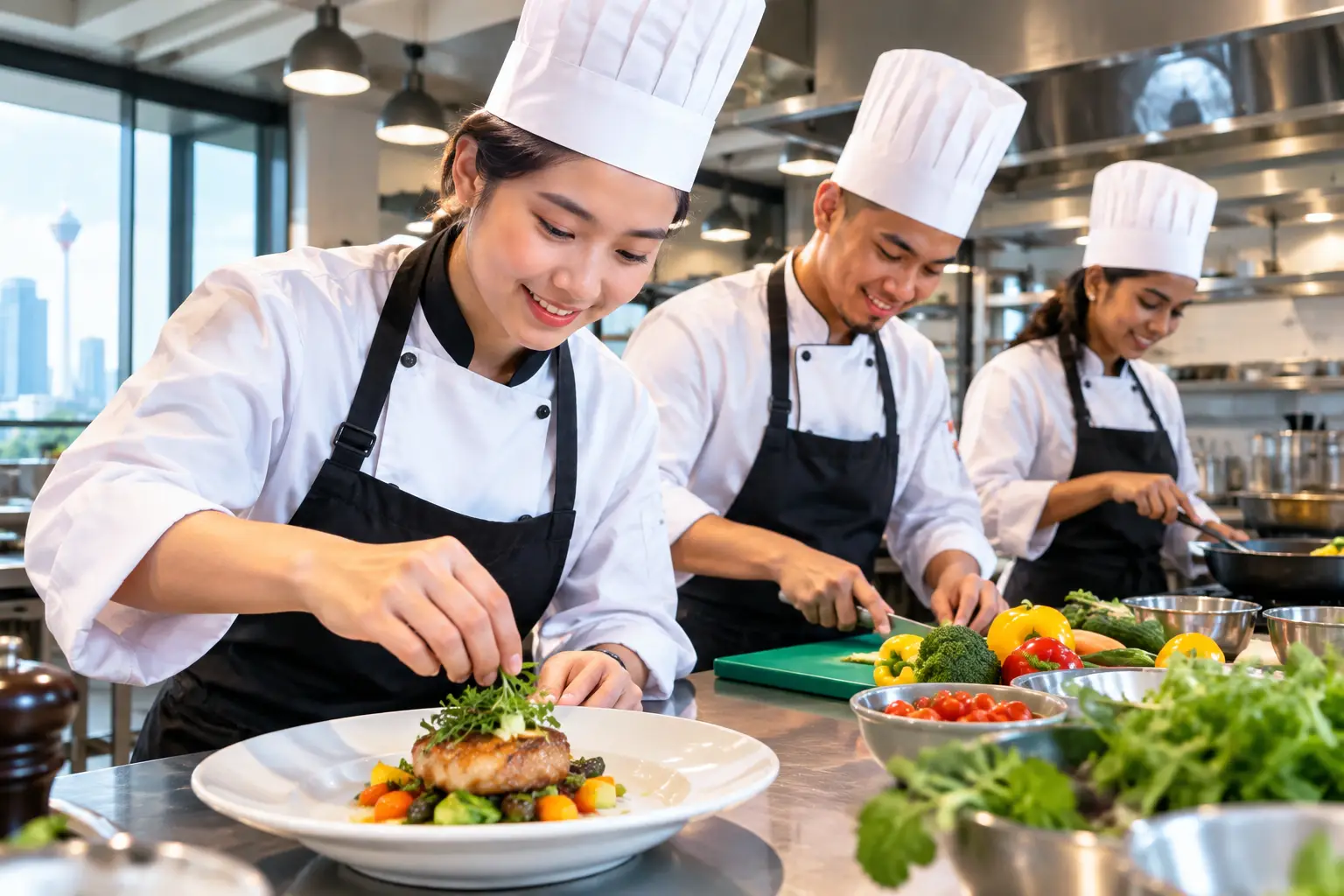
A busy kitchen does not hire people based on passion alone. When service starts, the team needs someone who can prep accurately, work safely, communicate under pressure, and send out food that meets the same standard every time. If you are asking what jobs need culinary diploma training, the honest answer is that not every food job requires one – but a diploma can make a real difference when you want skilled kitchen roles, structured career growth, or opportunities beyond entry-level work.
For school leavers, working adults, and career changers, culinary training is a practical way to turn an interest in food into professional capability. You are not just learning recipes. You are learning how a commercial kitchen operates, how ingredients behave, how to manage time, and how to contribute to a brigade without losing your calm.
What jobs need a culinary diploma most often?
A culinary diploma is commonly requested or strongly preferred for roles where employers expect more than basic cooking experience. Hotels, established restaurants, resorts, catering companies, central kitchens, and cruise operations often look for candidates who understand professional standards from day one.
The requirement depends on the employer and role. A small café may hire an enthusiastic beginner and train them on the job. A hotel kitchen preparing hundreds of meals for a function has less room to teach foundational knife skills, food safety, stock preparation, and station organization during a busy shift. That is where practical culinary training gives you a stronger starting point.
Commis chef and junior cook
For many graduates, a commis chef role is the first step into a professional kitchen. You may be assigned to prep vegetables, portion proteins, prepare sauces, assist with mise en place, and support a specific kitchen station. Some employers will hire without a diploma, but candidates with formal training can show they already understand hygiene, kitchen terminology, equipment handling, and the pace of service.
A diploma does not mean you walk in as an executive chef. It means you enter with a foundation that helps you learn faster, take feedback well, and earn greater responsibility through consistent work.
Chef de partie and station chef
A chef de partie runs a section of the kitchen, such as grill, sauce, pantry, pastry, or hot kitchen. This role usually requires proven experience, and a culinary diploma can support your progression by teaching the systems behind a well-run station.
You need to plan prep, maintain quality, reduce waste, communicate with the head chef, and keep your area clean throughout service. Employers may not always state that a diploma is mandatory, but they often expect the practical standard associated with one. This is especially true when a kitchen serves a large menu or follows strict brand procedures.
Pastry chef, baker, and dessert specialist
Patisserie is one area where technical training matters greatly. Baking is precise. Temperature, ratios, fermentation, texture, timing, and presentation all affect the final product. A pastry kitchen needs people who can follow formulas, produce consistent batches, and understand why a mousse splits or why a sponge collapses.
Jobs in hotel pastry departments, specialty bakeries, dessert shops, and event catering can value a diploma in patisserie or culinary arts because it demonstrates structured practice. If your goal is to create plated desserts, artisan breads, celebration cakes, or laminated pastries, hands-on training helps you build a portfolio of work as well as confidence.
Chinese cuisine cook and specialty cuisine roles
Specialty kitchens often need cooks with focused techniques. In Chinese cuisine, for example, wok control, knife work, steaming, roasting, stock preparation, and timing are skills developed through repeated practice. A diploma or specialized program can be useful when applying to restaurants that expect cooks to understand traditional methods alongside modern kitchen discipline.
The same principle applies to other cuisine-focused roles. Employers want evidence that you respect the food, can follow the kitchen’s standards, and are prepared to keep learning from experienced chefs.
Catering and banquet kitchen roles
Catering work is different from cooking one plate at a time in a small restaurant. You may prepare food for weddings, corporate functions, hotels, or large events, where timing and volume are critical. A culinary diploma is valuable because it develops production planning, portion control, safe holding temperatures, teamwork, and presentation at scale.
In banquet kitchens, a small mistake can affect hundreds of guests. Employers look for people who can stay organized, follow recipes accurately, and work as part of a coordinated team.
Cruise ship culinary positions
Cruise kitchens can offer a demanding and exciting environment for cooks who enjoy international teams and high-volume service. Roles may include galley cook, pastry cook, buffet cook, or specialty restaurant cook. A culinary diploma is often an advantage because cruise employers need staff who can adapt quickly to professional procedures, diverse menus, and long shifts.
However, a diploma is only one part of preparation. Cruise roles may also involve medical checks, safety training, travel documentation, and relevant work experience. If this is your goal, build your kitchen skills first and be ready for a structured, disciplined workplace.
Jobs where a culinary diploma helps, but may not be required
Some food careers do not strictly require a culinary diploma, yet formal training can still help you stand out. These include café cook, kitchen assistant, private cook, food product demonstrator, recipe developer assistant, and small food business owner.
For entrepreneurs, culinary training can be particularly useful because good food alone is not enough. You also need consistency, food cost awareness, portion control, menu planning, hygiene practices, and efficient preparation. A well-made signature dish is a start. A repeatable process is what helps a food business serve customers reliably.
A diploma may also support a move into front-of-house and food and beverage operations. Understanding how food is prepared helps when coordinating service, explaining menu items, handling guest requests, and communicating between the dining room and kitchen.
What employers look for beyond the diploma
A qualification opens a conversation. Your daily habits help you keep the opportunity. During interviews and kitchen trials, employers often pay close attention to how you work, not just what certificate you hold.
They look for clean and safe food handling, basic knife confidence, punctuality, willingness to follow instructions, awareness of waste, and a respectful attitude toward the team. They also want someone who can handle a busy shift without becoming careless. A chef who tastes, checks, asks questions, and improves is more valuable than someone who assumes they already know everything.
At Ambitious Academy, we focus on the practical side of this preparation. Our mentors guide students through real kitchen routines, from mise en place and cooking methods to plating, teamwork, and service discipline. Recognized qualifications matter, but so does having the confidence to step into a kitchen and contribute responsibly.
Choosing the right culinary path for your goal
Before enrolling, start with the kind of work you can picture yourself doing. If you enjoy the energy of savory cooking and restaurant service, a broad culinary or chef apprenticeship route may suit you. If you are drawn to detail, decoration, texture, and precision, patisserie could be a better fit. If you want to develop heritage techniques and work in specialty kitchens, Chinese cuisine training may give you a clearer direction.
It also helps to ask practical questions. How much kitchen time will you get? Will you practice with commercial equipment? Are you assessed on real skills, not only written work? Will you learn food safety, costing, menu planning, and teamwork? These details shape how prepared you will feel when it is time to apply for work.
Modern kitchens are also becoming more digital. Basic tools for inventory tracking, recipe costing, scheduling, and menu planning can make a chef more organized. AI can support research, planning, and content ideas for a food business, but it cannot replace your palate, your judgment, or the care you bring to a plate. Your hands, senses, and discipline remain the heart of the craft.
A culinary diploma is not a shortcut around hard work. It is a structured place to begin that hard work with purpose. Choose training that puts you in the kitchen, lets you make mistakes safely, and gives you skills you can carry into your first shift and every step after it.