
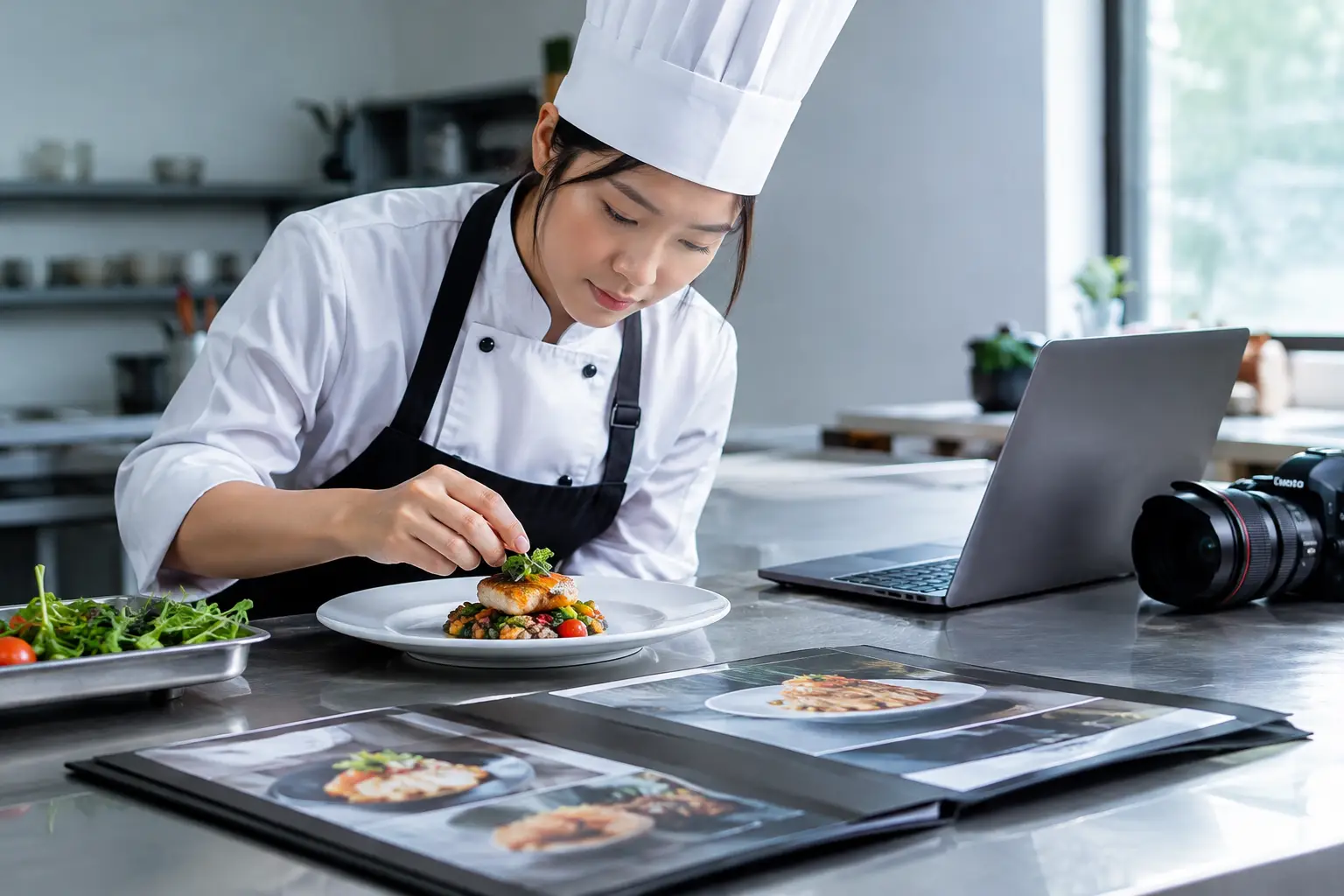
A chef portfolio is not a scrapbook of every dish you have ever made. It is proof that you can work with care, follow a brief, develop your skills, and present food professionally. If you are learning how to build a chef portfolio for a course, internship, kitchen trial, or first job, focus on showing the work that reflects where you want to go next.
A strong portfolio can help an employer see more than your resume. They can see your knife work, plating style, menu awareness, consistency, and attitude toward improvement. You do not need years of restaurant experience to begin. You need honest evidence, organized well.
How to Build a Chef Portfolio With a Clear Purpose
Start by deciding who will look at it. A portfolio for a culinary course application may show your enthusiasm, basic practical skills, and willingness to learn. A portfolio for a commis chef role should place more attention on kitchen experience, core techniques, food safety, teamwork, and the dishes you can prepare consistently.
If you are interested in pastry, your portfolio should look different from one aimed at a hot kitchen role. A patisserie student may include laminated dough, cakes, plated desserts, chocolate work, and measured recipes. A student pursuing Chinese cuisine may highlight wok techniques, ingredient preparation, steaming, knife cuts, and traditional presentation. The goal is not to prove you can do everything. It is to show a clear direction while demonstrating sound foundations.
Choose a simple format that is easy to review. A clean PDF is practical for email applications and interviews. A printed folder can work well for campus assessments or in-person kitchen meetings. You may also maintain a professional social media page or digital gallery, but it should support your portfolio, not replace it. Employers should be able to understand your skills without scrolling through unrelated posts.
Build Around Evidence, Not Claims
Saying you are creative, hardworking, or passionate is easy. Showing it is more convincing. Every portfolio item should answer a practical question: What did you make or do, what skills did it require, and what did you learn?
For each dish or project, include a short caption. Name the dish, list the key techniques, and explain your role. For example: “Pan-seared chicken supreme with roasted seasonal vegetables. I prepared the chicken, produced a reduced sauce, and practiced timing each component for service.” This gives context that a photo alone cannot provide.
Your strongest portfolio will usually include these four areas:
- A brief introduction with your career goal, current training, and food interests.
- Food photographs that show finished dishes, preparation stages, and relevant techniques.
- Recipes or menu work that demonstrate planning, costing awareness, dietary considerations, or ingredient knowledge.
- Experience and feedback from practical classes, kitchen placements, competitions, events, part-time work, or mentors.
Keep the introduction short. A few focused sentences are enough. Mention the type of kitchen or cuisine you hope to explore, but avoid making promises you cannot support yet. A student who writes, “I am building confidence in classical cooking techniques and want to develop in a professional hotel kitchen,” sounds more credible than someone claiming to be an expert after a few classes.
Take Food Photos That Show Your Standard
Great food photography does not require expensive equipment. A recent smartphone, clean lighting, and careful framing can produce useful portfolio images. Natural window light often works well. Avoid heavy filters, dark restaurant lighting, cluttered counters, or photos that make food look a different color from reality.
Take one clear final image, then capture selected process shots when they show a real skill. A photo of uniform julienne vegetables, properly shaped dumplings, a smooth sauce, or dough at the correct stage can be valuable evidence. Process photos are especially useful when the final dish is simple but the technique behind it is demanding.
Presentation matters, but do not let styling hide weak fundamentals. A beautifully arranged plate cannot compensate for uneven cooking or poor knife work. Choose images of dishes that are clean, properly portioned, and honestly prepared by you. If a group completed the work, state your contribution clearly.
Aim for quality over quantity. Eight to 12 strong dishes will usually make a better impression than 40 repetitive images. Include variety only when it supports your goal. For a general culinary portfolio, that might mean one breakfast dish, a soup or sauce, a protein main, a vegetable-focused dish, a dessert, and an event or buffet setup.
Show the Skills Kitchens Actually Need
Professional kitchens value more than attractive plates. They need people who can prepare safely, communicate clearly, manage time, reduce waste, and stay calm when service becomes busy. Your portfolio should make room for these habits.
Add a skills page organized by categories such as preparation, cooking methods, pastry, service, or menu planning. Be specific. “Knife skills” is broad, while “dice, julienne, chiffonade, filleting fish, and portioning chicken” tells a clearer story. Only include skills you have practiced enough to discuss and demonstrate.
Food safety belongs here too. Note relevant training in hygiene, allergen awareness, cleaning procedures, temperature control, and cross-contamination prevention. These are not minor details. They show that you understand the responsibility behind preparing food for others.
If you have completed a practical qualification, training module, certificate, or competition, include it with the date and provider. Recognized training gives employers context, while your photographs and reflections show how you apply the learning. Both matter.
Include Menus, Costing, and Real Kitchen Thinking
A chef portfolio becomes more useful when it shows that you think beyond a single plate. Add one or two sample menus, catering proposals, or event projects if you have them. Explain the occasion, target customer, serving style, and your role in the planning.
You can also include a basic recipe costing sheet. It does not need to be complicated. Show ingredient quantities, estimated cost per portion, selling price if relevant, and any effort made to reduce waste. This is particularly helpful for students interested in food and beverage operations, catering, or eventually running a small food business.
Be realistic about what you know. Costing changes with suppliers, location, season, and portion size. The point is not to present perfect numbers. It is to show that you understand food has both creative and business value.
Digital tools can help you organize recipes, label images, format menus, and track ingredient costs. Use them to support your culinary judgment. AI can help you brainstorm a menu theme or improve the layout of a portfolio page, but it should never invent experience, create false certificates, or replace your own recipe testing. Your portfolio must remain your work.
Add Experience, Feedback, and Progress
Early in your career, progress is evidence. Include practical class projects, school events, volunteer cooking, family catering, pop-up stalls, or supervised placements. Describe what you learned from each experience, especially when something did not go as planned.
For example, you might write that a sauce split during practice, so you adjusted your heat control and learned to add butter gradually. Or you may explain how working an event taught you to prep in batches, label ingredients, and communicate with teammates. Honest reflection shows maturity and a willingness to improve.
Feedback can strengthen a portfolio when it is specific. A short note from an instructor or supervisor about your cleanliness, organization, consistency, or teamwork is more useful than a vague compliment. Ask permission before including names, comments, or photographs from a workplace.
Keep It Current Before Every Opportunity
Review your portfolio every few months and before every application. Remove weaker work, update your contact details, correct spelling, and place the most relevant examples first. If you are applying to a bakery, lead with breads and pastries. If you are interviewing for a restaurant kitchen, lead with core cooking techniques and service-ready dishes.
Bring your portfolio to an interview or kitchen trial, but be prepared to talk through it naturally. Employers may ask why you chose a dish, how you handled timing, what you would improve, or what role you played in a group task. Practice answering with honesty and detail.
Your first portfolio does not need to be perfect. It needs to be real, neat, and moving forward. Start with the best three dishes you have made, document the next practical session with intention, and let each new skill earn its place. At Ambitious Academy, practical learning is designed to give students the kind of real work they can confidently show, discuss, and build on.