
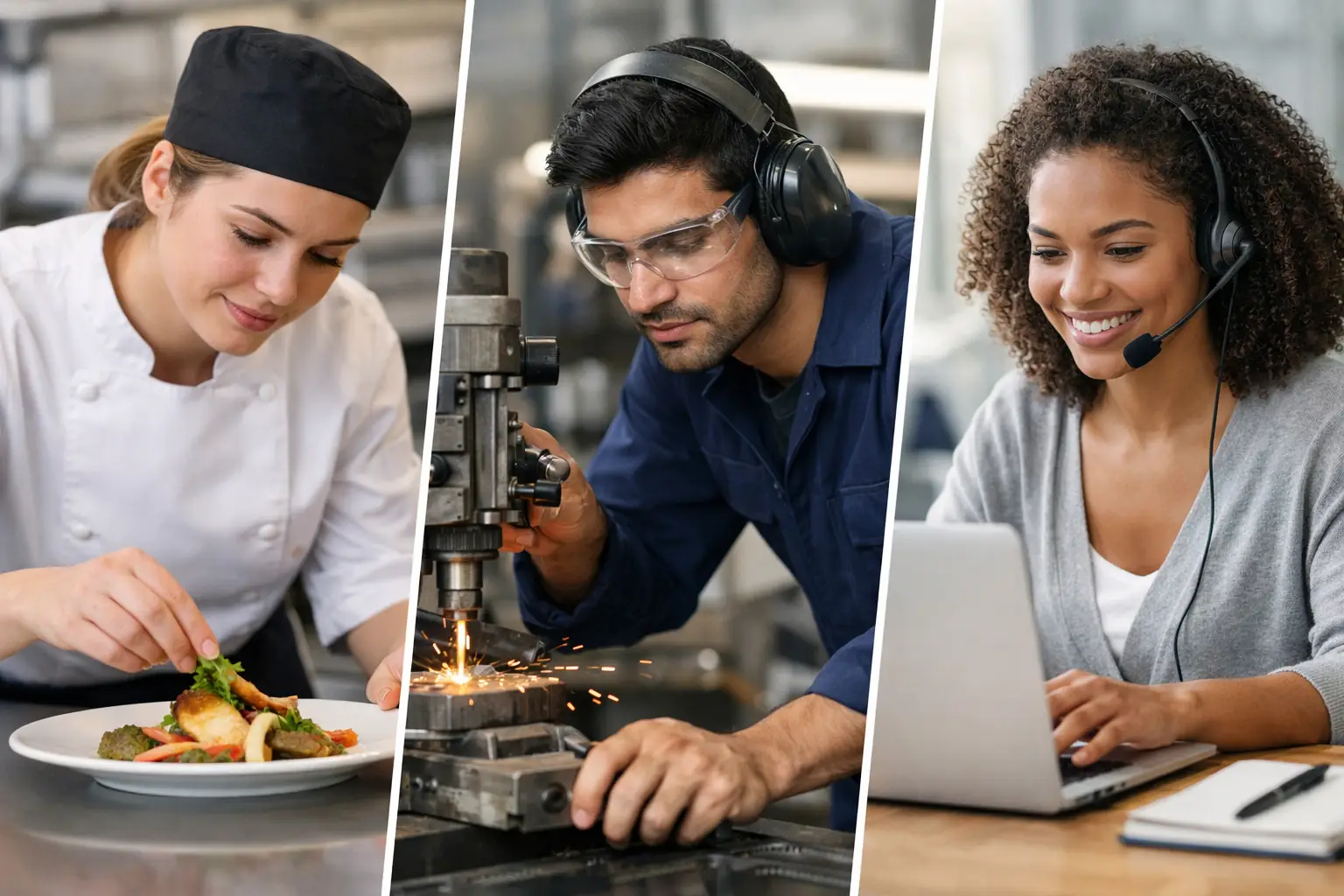
Not every student is meant for exam-heavy learning.
Some students can sit through hours of theory, memorize chapters, and score well on paper. Some cannot. That does not automatically mean they are lazy, weak, or “not smart enough.” Sometimes it simply means they learn better through action instead of memorization.
And honestly, this is something many Malaysian students only realize after SPM.
Every year, there are students who leave secondary school feeling lost because their results were average. They look at university pathways and immediately feel like they are already behind everyone else. But the reality is, there are many careers today that care far more about skill, discipline, attitude, and practical ability than perfect academic results.
That is where practical diploma courses come in.
At Ambitious Academy, many students discover that they actually perform much better once learning becomes hands-on, structured, and connected to a real career path.
What Makes a Practical Diploma Different?
A practical diploma is not just about sitting in a classroom listening to lectures all day.
You learn by doing.
Depending on the course, that could mean:
- working inside a training kitchen
- handling real equipment
- producing creative content
- learning customer service
- practicing styling techniques
- running digital marketing campaigns
- participating in simulated workplace environments
The goal is not only to help students pass exams. The goal is to help students become capable and employable.
That difference matters more than people think.
A student who struggled with textbook learning in school may suddenly become highly focused inside a kitchen environment. Another student who disliked traditional studying may thrive when working on video production, social media campaigns, or makeup techniques where progress can actually be seen.
When learning feels connected to real life, motivation changes.
Why More Post-SPM Students Are Choosing Practical Courses
A lot of students today are asking a very practical question after SPM:
“What course will actually help me build a future?”
That question is fair.
Many students do not want to spend years studying something they cannot connect with. They want skills that feel useful. They want to graduate with confidence instead of uncertainty.
Practical diploma courses can offer that direction earlier.
Instead of learning theory first and figuring out the industry later, students are exposed to the working environment while they study. That makes the transition into employment less intimidating because they are already familiar with the expectations of the industry.
For some students, this becomes a major turning point.
We have seen students who were quiet, unmotivated, or disconnected during school become much more confident once they enter a hands-on learning environment. When they start seeing improvement in their own work, their mindset changes too.
Sometimes students do not need more pressure.
They need a different environment.
Practical Diploma Courses With Strong Career Potential
Not every industry works the same way. But there are certain fields where practical skills matter tremendously.
Culinary Arts & Professional Cooking
The culinary industry is highly skill-based.
In a kitchen, employers care whether you can prepare ingredients properly, work under pressure, maintain hygiene standards, follow timing, and function as part of a team. These are things that cannot be mastered through theory alone.
Students in culinary training learn through repetition, practice, kitchen systems, and real food preparation. Over time, confidence develops naturally because improvement is visible.
For students who enjoy hands-on work and fast-paced environments, culinary education can become a very rewarding pathway.
Cruise Hospitality & Hospitality Operations
Hospitality is another field that suits students who enjoy service, teamwork, and structured operations.
Some students are especially attracted to cruise hospitality because it offers international exposure and a different type of career experience compared to a standard local office job. It is not always easy work, but it can open doors to valuable industry experience and personal growth.
Students who do well in hospitality are usually those who enjoy interacting with people, adapting quickly, and maintaining professionalism in busy environments.
Makeup Artistry
Makeup-related careers are highly practical by nature.
Students improve through live practice, technique correction, client interaction, and continuous repetition. Whether it is haircutting, styling, coloring, or makeup application, progress becomes visible over time.
That visible progress is important because it helps students build confidence in themselves.
For many practical learners, confidence grows faster when they can physically see the results of their own improvement.
Digital Marketing & Creative Media
Creative and digital industries are growing quickly, but many people misunderstand these fields.
Digital marketing is not just “posting on social media.” Creative media is not simply “making videos.”
Students need to understand branding, communication, content strategy, editing, campaign planning, audience behavior, and visual storytelling. The training is creative, but it is also highly practical and industry-focused.
For students who enjoy creativity, online platforms, content creation, or visual communication, this can become a strong modern career pathway.
Choosing the Right Course Matters
Not all diploma courses are equally useful.
Before choosing a course, students should look beyond the course name and pay attention to the actual training environment.
Some important questions to ask:
- How much hands-on training is included?
- Are students exposed to real industry situations?
- Is there practical assessment?
- Do lecturers guide students closely?
- Does the course help students build confidence and employable skills?
A good practical diploma should prepare students for real working environments, not just classroom assignments.
Support also matters more than many students realize.
Students who struggled academically do not usually need constant criticism. They need structure, guidance, patience, and lecturers who genuinely want to help them improve step by step.
That kind of environment can completely change how a student sees themselves.
Practical Education Is Not a “Second-Class” Option
There is still a mindset in society that university is the only respectable pathway.
But the working world has changed.
Today, employers across many industries are looking for people who can actually perform, adapt, communicate well, and contribute immediately. In practical industries especially, skill and attitude often matter more than academic prestige alone.
A student with strong technical ability, professional discipline, and real industry exposure can sometimes be far more employable than someone with qualifications but little practical experience.
That is why practical diploma education should not be viewed as a “backup plan.”
For the right student, it may actually be the better pathway.
Your SPM Results Are Not the End of Your Story
Many students carry disappointment after receiving their results.
But one exam period should not decide your entire future.
Some students simply grow later. Some students need a different style of learning before their potential starts to appear. Others only become motivated once they can finally connect education to something real.
What matters most is whether you are willing to learn, improve, and take your next step seriously.
At Ambitious Academy, practical diploma courses are designed to help students build real skills, confidence, and career direction through hands-on learning and industry-focused training.
Not every student needs the same path.
Sometimes the right environment changes everything.