
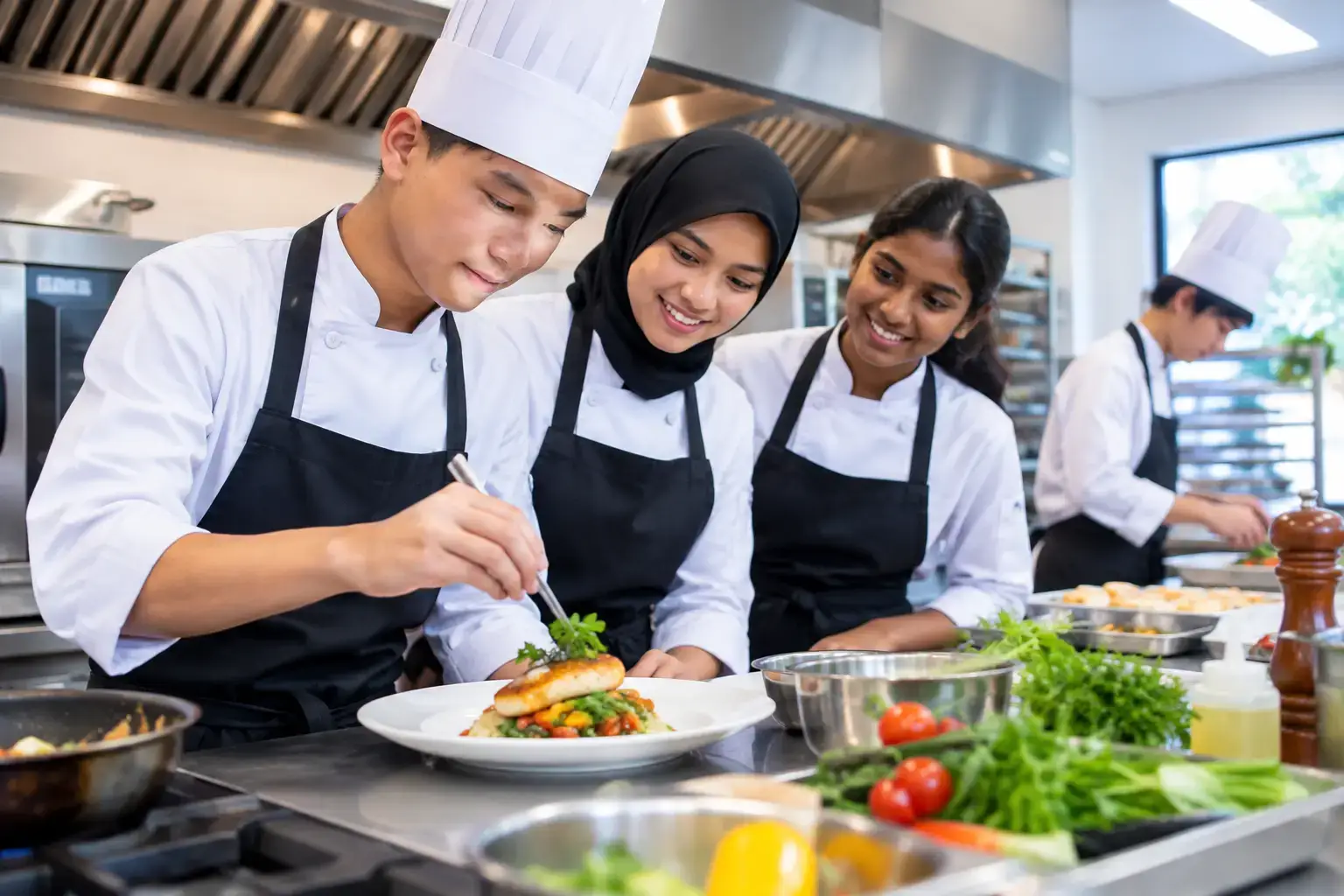
A busy kitchen does not wait for anyone to feel ready. Orders come in, a sauce needs attention, a teammate needs support, and every plate must leave the pass at the right standard. That is why a professional chef apprenticeship guide should focus on what actually happens behind the kitchen doors, not just on recipes you can memorize.
For students who enjoy food, creativity, and working with their hands, chef training can turn that interest into a serious professional direction. The path is demanding, but it is also practical. You build confidence by prepping, cooking, tasting, correcting, cleaning, and repeating the process until good habits become second nature.
What a Professional Chef Apprenticeship Guide Should Show You
A chef apprenticeship is not simply about learning how to cook dishes from different cuisines. It is about learning how a professional kitchen works as one team. You need technical ability, but you also need pace, organization, communication, food safety awareness, and the discipline to maintain standards when service gets busy.
At the start, much of your work may feel basic: washing produce properly, weighing ingredients accurately, holding a knife safely, labeling containers, and preparing stations before cooking begins. These tasks are not small in a real kitchen. A poorly prepared station can slow down the whole team. A well-prepared station gives you room to work calmly and consistently.
This is why hands-on training matters. Reading about a julienne cut is different from producing even, usable cuts under a mentor’s observation. Knowing the name of a mother sauce is different from understanding why it split, how to correct it, and when it is no longer suitable to serve.
Start With the Skills Kitchens Notice
The strongest foundation is built through repetition. Before focusing on complex plating or signature dishes, professional trainees learn the methods that support almost every kitchen section.
Knife work and ingredient preparation
Good knife skills are about more than speed. They improve consistency, reduce waste, and help ingredients cook evenly. You will practice selecting the right knife, maintaining a stable cutting board, controlling your grip, and preparing ingredients to a required size.
In a training kitchen, a mentor can spot habits that are difficult to correct later, such as lifting your knife too high, rushing through uneven cuts, or leaving your station cluttered. Small adjustments made early can make a major difference during service.
Heat, timing, and tasting
Cooking is a series of decisions. Is the pan hot enough? Should the protein rest? Does the sauce need acidity, salt, reduction, or more time? These are judgments you develop through guided practice.
A professional chef does not rely only on a timer. They use sight, smell, sound, touch, and taste. A chicken breast may reach the correct temperature, but if it is dry, the work is not finished. A broth may look clear, but if it lacks depth, it needs attention. Training teaches you to notice these details and respond with purpose.
Food safety and kitchen discipline
Professional standards protect customers, colleagues, and your own reputation. Safe storage temperatures, correct handling of raw ingredients, allergen awareness, personal hygiene, and cleaning routines are part of every serious culinary role.
Kitchen discipline also means arriving prepared, following instructions, communicating early when there is a problem, and owning mistakes without making excuses. These are employability skills, but they are also signs that a team can trust you during a demanding shift.
Learn the Rhythm, Not Just the Recipe
A recipe tells you what to make. Kitchen rhythm teaches you how to deliver it repeatedly.
Imagine preparing for a lunch service. You may need to portion ingredients, make stocks, prepare garnishes, check inventory, label sauces, clean equipment, and organize your section before the first ticket arrives. During service, you must work quickly without losing track of cooking times or plating details. After service, the kitchen still needs to be cleaned, stored, and reset.
This rhythm can be challenging for beginners, especially if they expect cooking to feel like a relaxed home kitchen. But it is also where many students discover they thrive. They enjoy the focus of working toward a shared goal and seeing a dish move from raw ingredients to a guest-ready plate.
At Ambitious Academy, our Executive Chefs Apprenticeship Program is designed around this practical reality. Our mentors help students build their craft through real kitchen experiences, where technique and professional habits develop together.
Choose Training That Builds Credible Progress
When comparing a culinary pathway, look beyond attractive food photos or a long list of dishes. Ask what you will actually do with your hands, how often you will receive feedback, and whether the qualification is recognized and relevant to the industry you want to enter.
A valuable program gives you opportunities to practice across essential areas, such as hot kitchen operations, cold preparation, stocks and sauces, basic baking knowledge, menu understanding, and food presentation. It should also teach you how to work as part of a brigade, because kitchens depend on clear roles and mutual support.
The right route depends on your goals. A school leaver may want a structured start that builds confidence from the ground up. A working adult changing careers may already have customer service, management, or organizational strengths and need intensive culinary practice. Someone who hopes to work in hospitality may benefit from understanding how the kitchen connects with service, guest expectations, and food and beverage operations.
There is no need to have every career step mapped out before you begin. What matters is choosing a program that gives you real evidence of your developing ability: dishes you can reproduce, techniques you understand, standards you can explain, and practical work you can perform reliably.
Use Digital Tools Without Losing the Human Craft
Modern kitchens increasingly use digital systems for inventory, recipe costing, scheduling, ordering, and communication. AI tools can also support early research, help organize study notes, suggest ways to reduce ingredient waste, or assist with menu concept brainstorming.
These tools are useful, but they do not replace a chef’s judgment. An app cannot taste a curry and decide whether the balance is right for the intended guest. It cannot feel whether pastry dough has been overworked or notice that a teammate is falling behind during service.
Treat digital tools as a support system. Use them to plan better, document your learning, and understand kitchen operations more clearly. Then develop the human skills that remain central to the craft: taste, care, observation, teamwork, and pride in every plate.
Build Habits Before You Build a Big Menu
Many new culinary students want to create impressive dishes immediately. Ambition is useful, but consistent habits will take you further than rushing toward complicated plates.
Start by keeping a simple learning record after practical sessions. Write down what you cooked, what worked, what you would change, and one technique to practice again. Pay attention to waste. If you trim too much from vegetables or misjudge a batch of sauce, note why it happened. Professional growth often comes from these quiet corrections.
Also practice receiving feedback without taking it personally. When a mentor says your seasoning needs work or your plate lacks consistency, they are showing you where your next improvement lies. The goal is not perfection on day one. The goal is to become more reliable, capable, and thoughtful every week.
Take the First Practical Step
If cooking is the work you keep coming back to, give yourself a proper environment to develop it. Visit a campus, ask to understand the practical training experience, and speak with an advisor about the pathway that fits your goals. Bring questions about kitchen hours, training routines, qualifications, and the skills you will graduate ready to demonstrate.
We do not measure your potential by whether you already know every technique. We look for determination, curiosity, and a willingness to learn through practice. A professional kitchen rewards people who show up prepared to improve – one station, one service, and one well-made dish at a time.