Not every student sees cooking as just “making food.”
Some are naturally drawn to it — watching how kitchens operate, how ingredients transform, and how dishes come together under pressure.
But for many students, especially after SPM, cooking often feels like something informal or hobby-based, not a real career path.
That perception is changing.
Today, Chinese cuisine is no longer just traditional home-style cooking. It is evolving into a more structured, technical, and professional industry.
That is why programs like the Chinese Molecular Cuisine & Dim Sum Course are becoming more relevant — especially for students who want hands-on, skill-based training instead of purely academic study.
At Ambitious Academy, this course is designed with one goal in mind:
👉 To train students to become job-ready kitchen professionals, not just home cooks.
What Is This Course Really About?
When people hear “molecular cuisine,” they often imagine something complicated or experimental.
In reality, the core idea is simple:
👉 Using modern culinary techniques to improve texture, presentation, and food structure.
Combined with dim sum training, this course blends:
- Traditional Chinese dim sum craftsmanship
- Modern culinary techniques and food innovation
It is a balance between heritage and innovation.
What You Will Actually Learn
This is not a course where you only watch demonstrations.
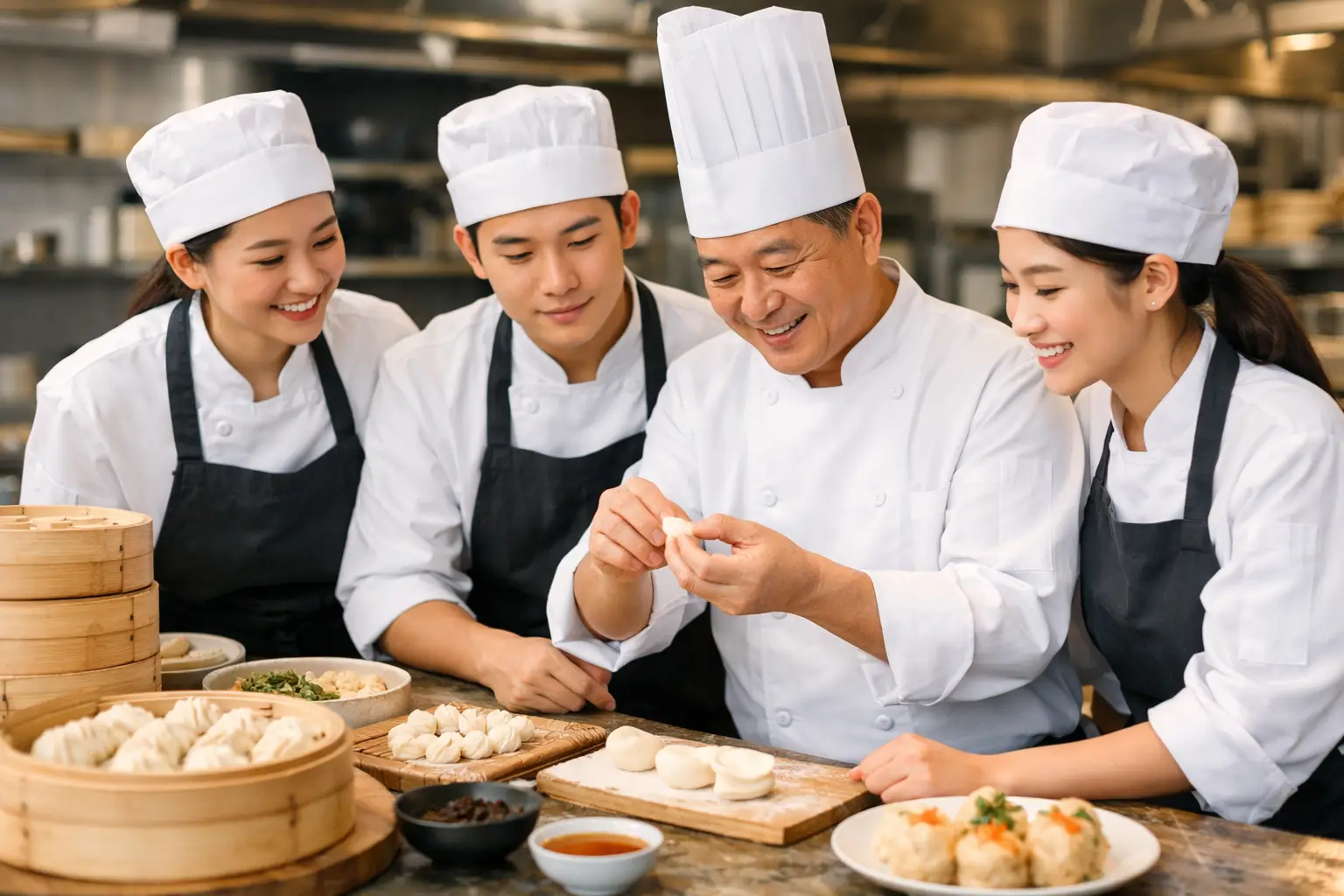
It is built around real kitchen practice.
1. Dim Sum Fundamentals
Students will train in:
- Dough preparation and control
- Filling techniques
- Wrapping and shaping methods
- Steaming, frying, and cooking methods
- Consistency and plating
2. Chinese Molecular Cuisine Basics
You will also explore:
- Ingredient structure and transformation
- Temperature and texture control
- Modern plating concepts
- Visual food presentation
- Culinary innovation techniques
3. Professional Kitchen Training
Beyond cooking, students learn how a real kitchen operates:
- Kitchen workflow and timing
- Batch production
- Food hygiene and safety standards
- Team coordination
- Time and pressure management
The goal is not just to “cook once successfully,” but to:
👉 Repeat skills consistently at a professional standard.
Why This Course Fits Hands-On Learners
Not every student learns well through lectures and textbooks.
Some students learn faster by:
- watching
- doing
- correcting
- repeating
This course is designed exactly for that kind of learner.
Progress is visible:
- Dough improves with practice
- Techniques become more stable
- Confidence grows through repetition
For students who struggled in traditional academic environments, this can be a turning point.
Because in the kitchen:
👉 Skills matter more than exam results.
At Ambitious Academy, many students who once felt uncertain about their future begin to gain direction once they enter hands-on training.
Not because they suddenly change —
but because the learning environment finally fits them.
Who Should Take This Course?
This program is suitable for students who:
- Enjoy hands-on learning
- Are interested in Chinese cuisine
- Prefer practical training over theory-heavy study
- Want to learn a professional skill
- Are looking for a career path after SPM
- Are interested in the food and hospitality industry
You do not need to be highly skilled at the beginning.
You just need the willingness to practice and improve.
Career Opportunities After Graduation
After completing this course, students can enter roles such as:
- Dim sum kitchen assistant
- Chinese restaurant kitchen crew
- Hotel F&B kitchen trainee
- Banquet kitchen staff
- Food production kitchen worker
With experience, career growth may lead to:
- Senior kitchen roles
- Section leadership
- Menu development
- Kitchen supervision
- Entrepreneurship
Some graduates also move into:
- Food business startups
- Dim sum stalls or cafés
- Frozen food production
- Catering businesses
In this industry, skill development directly expands your opportunities.
Why Choose Ambitious Academy?
At Ambitious Academy, the focus is not just on teaching recipes.
The goal is to prepare students for real industry environments through:
- Hands-on kitchen training
- Skills-based learning structure
- Industry-relevant curriculum
- Practical assessment system
- Career-focused development path
The objective is clear:
👉 To help students transition from training to employment with confidence.
Final Thought
This course is not just about cooking.
It is about building a skill that can become a career.
If you are looking for a pathway that is:
- Practical
- Skill-based
- Industry-focused
- And career-oriented
Then this may be more than a course —
it could be your starting point.
Because sometimes, a career does not begin in a lecture hall.
It begins in a kitchen, with hands-on training, and the decision to start learning for real.